A mutual fund prospectus is the legal disclosure document that U.S. securities law requires a fund to provide to investors, setting out its objectives, strategies, principal risks, fees, management, and standardized performance. The SEC adopted the summary prospectus framework in January 2009 under Release No. 33-8993, condensing the required disclosures into a front section a few pages long.
Horison publishes information, not investment advice, and what a disclosure document means for a particular portfolio depends on individual circumstances this publication cannot know. This article describes what the law requires a prospectus to contain; it does not evaluate any fund and recommends nothing.
What is a prospectus, and which laws require it?
A prospectus is the selling document of a registered investment company. Registration stems from the Securities Act of 1933, while the operating and disclosure obligations of mutual funds come from the Investment Company Act of 1940. Together they require that investors receive a document describing the fund before or at the time of investment.
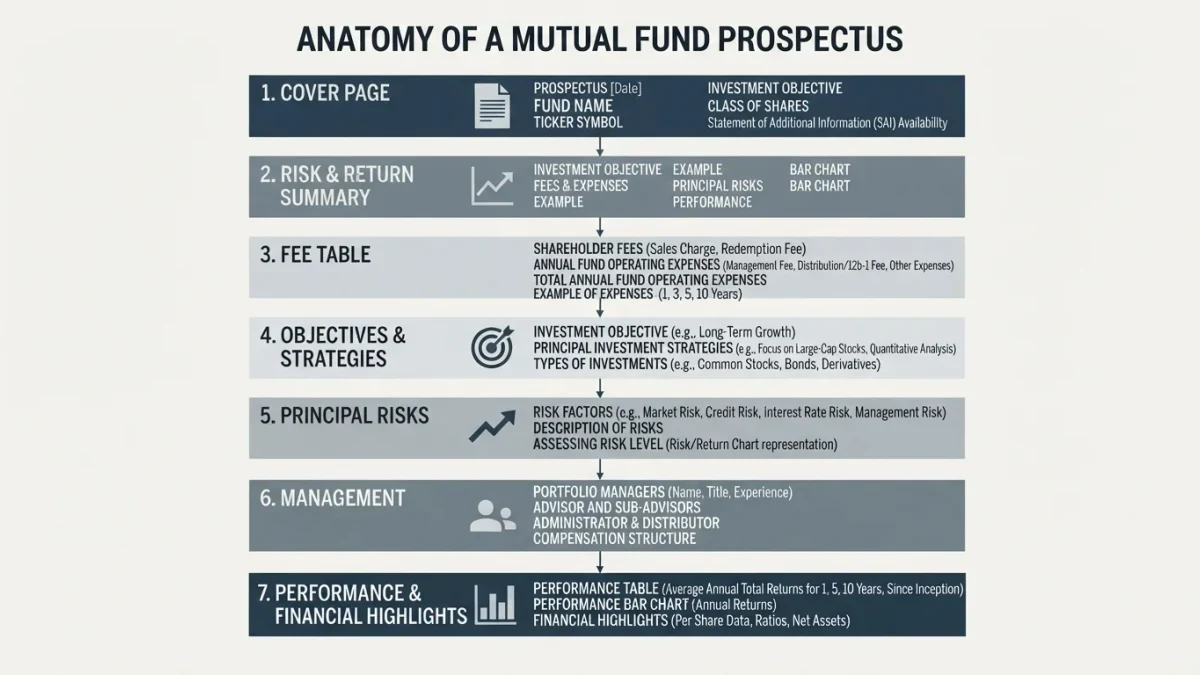
The SEC prescribes the contents through Form N-1A, the registration form used by open-end management investment companies. The form dictates the order of items, the required legends, and the standardized presentation of fees and performance, which is why prospectuses from competing sponsors read so similarly.
What appears in the summary prospectus?
Since the 2009 rule change, investors typically receive a summary prospectus of a few pages, with the full prospectus and supplementary documents available online and on request. The summary must open with the fund's investment objectives, principal strategies, and principal risks in plain language, followed by the fee table, risk-and-return information, and performance presentation.
The summary is legally sufficient for a purchase decision under SEC Rule 498, because the fuller documents are incorporated by reference. That structure has a practical consequence: material that shapes outcomes, such as complete fee arrangements across share classes, sits in the referenced documents, not necessarily on the first pages an investor reads.
What does the fee table disclose?
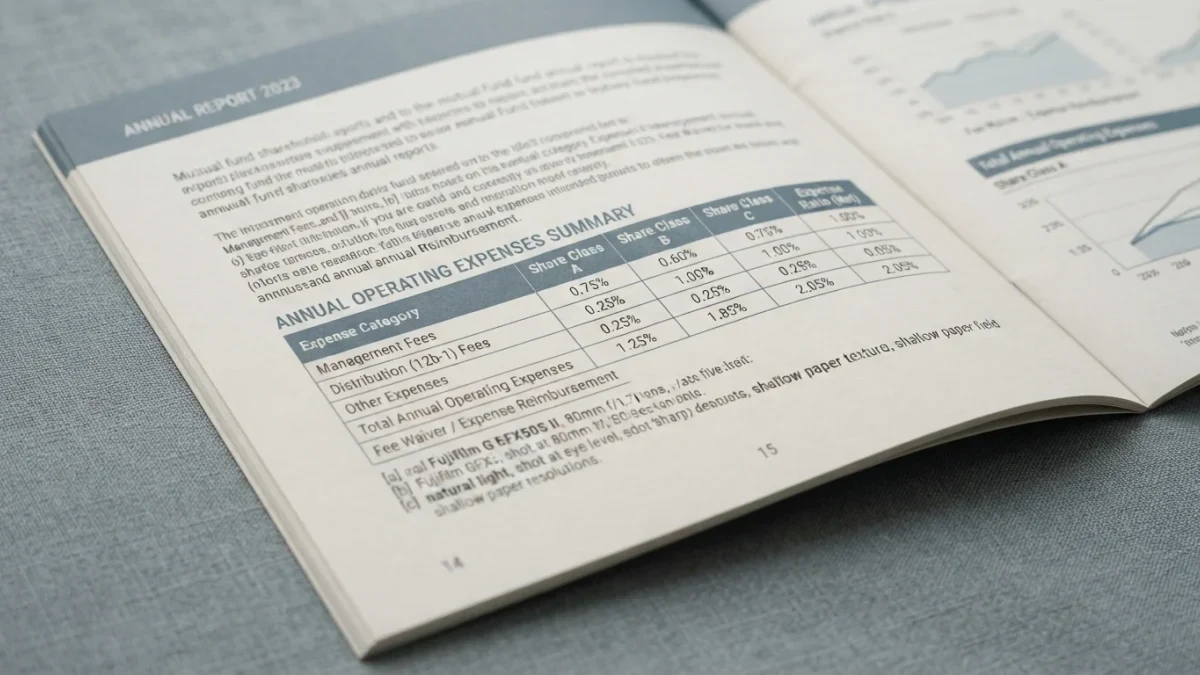
The fee table has two required blocks. Shareholder fees are per-transaction charges a specific investor pays, such as maximum sales loads, deferred sales charges, and redemption fees. Annual fund operating expenses express the recurring cost of running the fund as a percentage of assets: management fees, distribution and service (12b-1) fees, other expenses, and a total line.
FINRA rules cap combined 12b-1 fees at 1.00% of assets annually, 0.75% for distribution and 0.25% for shareholder servicing. A fund that charges anywhere near that ceiling carries a materially different cost structure from a low-cost index fund, a difference the table makes visible before any purchase.
The table below shows the standard shape with illustrative figures, not any actual fund's fees.
| Fee table line | Type | What it charges for |
|---|---|---|
| Maximum front-end sales load (illustrative 5.00%) | Shareholder fee | Paid from the investment at purchase, where a share class carries one |
| Redemption fee (illustrative 1.00%) | Shareholder fee | Charged on shares sold within a stated holding period |
| Management fee (illustrative 0.60%) | Annual operating expense | Paid to the investment adviser for managing the portfolio |
| Distribution and service (12b-1) fees (illustrative 0.25%) | Annual operating expense | Marketing and shareholder-servicing costs, capped by FINRA rules |
| Total annual fund operating expenses (illustrative 1.00%) | Annual operating expense | The recurring drag shown in the fund's expense ratio |
Why do share classes appear in the fee table?
The same fund often sells several share classes, each with its own fee structure. Class A shares typically carry a front-end load with lower annual expenses, Class B shares historically imposed deferred sales charges, and Class C shares charge level annual distribution fees without an upfront load. The prospectus must present the fee structure of every class offered, which makes cross-class comparison possible in one place.
Class structure changes what an investor pays for the identical portfolio. Two investors holding the same fund through different classes can bear materially different lifetime costs, a difference the fee table is legally required to expose before purchase.
How are strategies and principal risks described?
The strategies section states what the fund intends to buy: asset types, market-capitalization ranges, geographic scope, and concentration policies. Index funds disclose their target benchmark and the obligation, and the limits, of tracking it. Funds using leverage or derivatives must say so in this section.
Principal risks must be tied to those strategies rather than listed generically. A fund concentrated in a sector discloses sector risk; a fund holding foreign securities discloses currency and political risks. The law requires the relationship to be visible: higher expected opportunity is presented together with the specific exposures that create the possibility of loss.
What do the performance and financial sections show?
Performance appears as a standardized bar chart of annual returns for one-, five-, and ten-year periods, calculated after deduction of fund operating expenses and compared with a named broad-based securities index. The required legend stating that past performance does not guarantee future results accompanies the chart.
Form N-1A also requires standardized after-tax returns alongside the pre-tax figures, so taxable-account holders can see returns under stated tax assumptions. The after-tax line is one of the few places in fund literature where the cost of taxes is quantified in a comparable format.
The full prospectus closes with financial highlights: per-share income, expense, and return figures, plus net asset values and ratios turned over from the fund's audited statements. These figures are the audited spine of the marketing numbers quoted elsewhere.
What documents accompany the prospectus?
Three companion documents complete the disclosure set. The Statement of Additional Information (SAI) supplies portfolio policies, brokerage allocation, and officer details, and is incorporated by reference into the prospectus. Shareholder reports deliver audited holdings each period. The profile or fact sheet, by contrast, is marketing material that summarizes but does not replace the legal text.
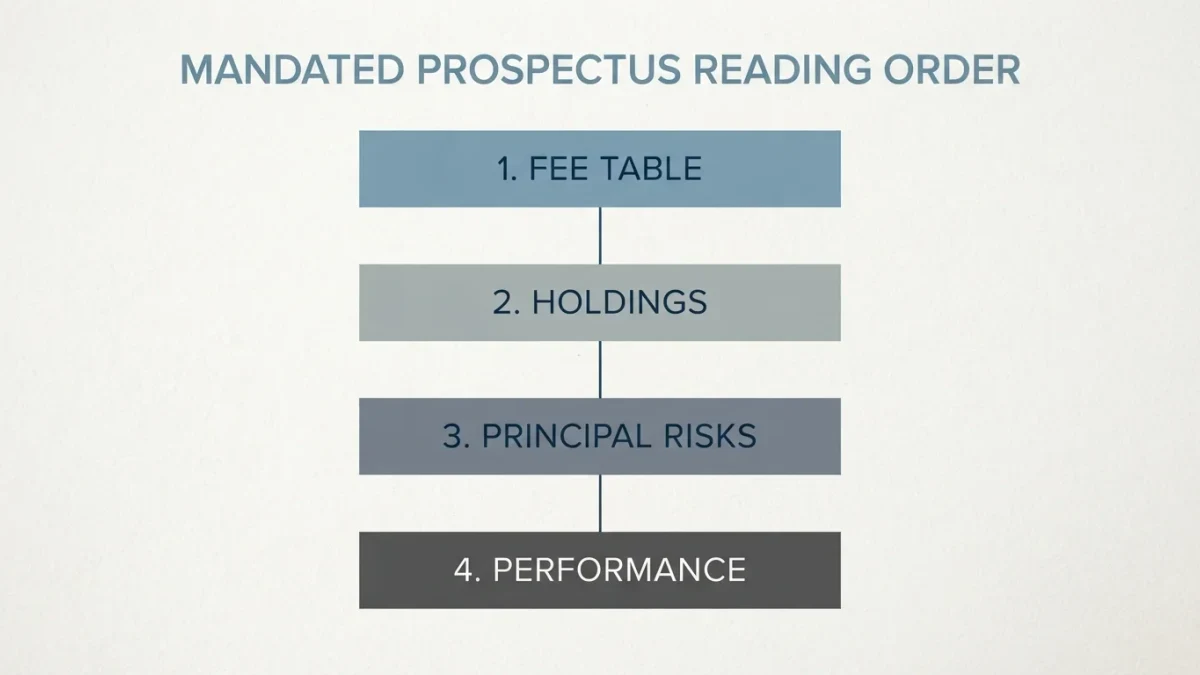
Every registered fund files these documents with the SEC, where they are public. Reading order is a practical choice: the summary prospectus for structure, the fee table and SAI for costs, and the shareholder report for what the fund actually holds.