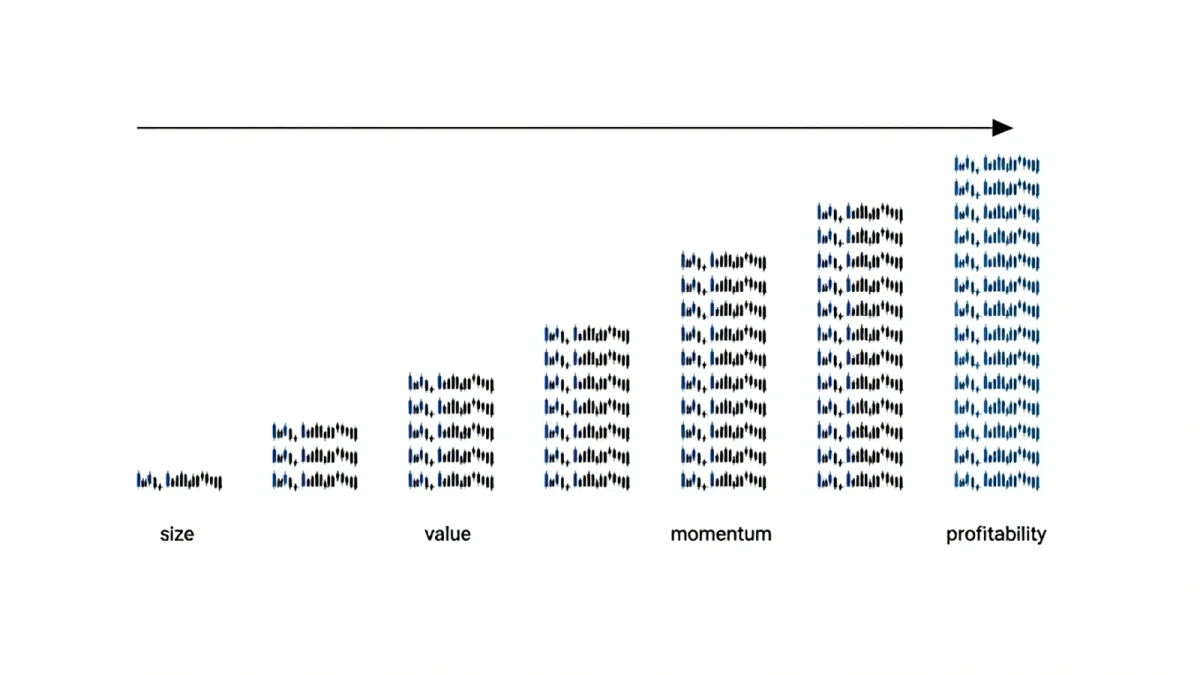

Factor investing is the practice of building portfolios around measured stock traits. Pricing models use these traits to explain returns. The reference point is the Fama-French three-factor model. Eugene Fama and Kenneth French designed it in 1992. It explains returns with three traits: market exposure, company size, and valuation.
Inside a portfolio, those traits show up as tilts. Smaller companies sit in one place, cheaper stocks in another. Where the tilts sit matters too, because taxes bite returns differently by account. Asset location across taxable and tax-advantaged accounts covers that placement question in detail.
This breakdown covers the documented factors and the build steps behind them. The allocation hub collects the wider reference set on portfolio building blocks.
What Counts as a Factor
A factor is a measured trait that splits stocks into groups with different average returns. Size is one. Valuation is another. The trait must show up in the data for every stock, so the same sort can run period after period.
Pricing models use factors to explain why two stocks with equal market exposure still earn different averages. The classic capital asset pricing model used one variable. The Fama-French model extended it to three, per Wikipedia's summary of the model.
The Documented Factor Lineup
Market exposure comes first. It is the excess return of the market itself, labeled Rm-Rf in the data files. Size follows as small minus big. Value is high minus low book-to-market. The Dartmouth data library that publishes the research series lists exactly those three under Fama/French 3 Research Factors.
Momentum came next. Stocks with strong past results kept beating weak ones by about 1 percent a month in the documented sample, per the momentum research summary on Wikipedia. The library tracks a Momentum Factor series of its own.
Two more traits round out the modern set. The library now lists a five-factor version. It adds profitability, labeled RMW, and investment, labeled CMA. Each addition came with published rules and open data.
How Factor Portfolios Are Built
The build is fixed and public. Sort the stock universe by market value into groups. Sort again by the trait, say book-to-market, within each size group. The library's size and book-to-market portfolios follow that two-way pattern.
A factor return is a spread. The value factor is what the cheap stocks earn above the richly priced ones, period by period. The published series report monthly returns with dividends reinvested on their ex-dates. For related coverage, see Alternative Asset Allocation: Which Sleeves Earn Their Place.
Rebalancing keeps the buckets honest. Fresh data re-sorts the universe each period. Stocks drift between buckets as their size or value changes. Nothing in the process turns on judgment calls.
Reading the Factor Data
The published record is open. Each factor series sits in the library as a downloadable file, in plain text and CSV form. The page prints fresh readings beside the factor names, marked with the month and the lookback window.
Openness is the point. Anyone can download the series, rebuild the sorts, and check the numbers. The same data that backs the model also lets a reader test it.
What the Framework Does Not Claim
The entry on the model flags academic debate about the size and value factors. Researchers argue over whether the spreads pay for risk, reflect flaws in the data, or both. The framework records the measurement. It does not settle the argument.
The averages also swing. A factor can run below its long-run mean for stretches that last years. The published series show those dry spells. Past spreads are measurements, and they carry no promise about any future period.
Conclusion: Measured Traits, Documented Spreads
Factor investing rests on a published record. Three factors came from Fama and French, momentum joined as a fourth, and the library now carries a five-factor set. The rules are stated, the data is open, and the criticisms are on the record. The averages come with no promise about the next period. That mix of rules and openness is what separates a factor from a story.