
An emergency fund is a liquid reserve, usually counted in months of expenses, held outside the long-term portfolio so that unplanned spending never forces the sale of risk assets at depressed prices. The Federal Reserve's 2023 household survey found 63 percent of U.S. adults could cover a 400-dollar emergency with cash or its equivalent.
This explainer documents the fund's structural role, the sizing frameworks published in research and practitioner guidance, and the criticisms each carries.
What structural role does an emergency fund play?
An emergency fund separates two functions that a single portfolio otherwise conflates: liquidity for near-term spending, and risk-taking for long-term growth. The reserve covers the first function entirely, which is what allows the remaining portfolio to be built for horizon rather than for contingency. Frameworks in household finance treat this separation as structural, not incidental.
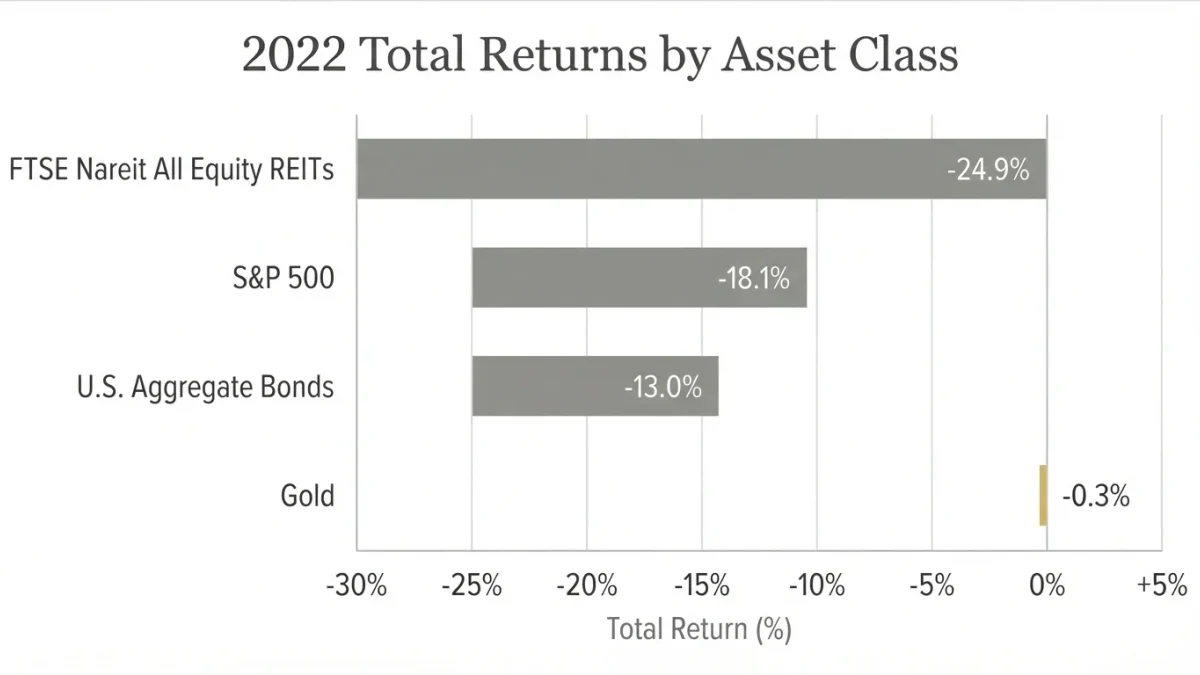
The mechanism shows why placement matters. When an unplanned expense arrives during an equity drawdown, a household without a buffer must meet the bill by selling risk assets at the same prices the drawdown depressed — locking in losses that a funded reserve would have deferred. The sequence-risk literature documents the same asymmetry in retirement withdrawals: order of returns matters separately from average returns.
The reserve also defines risk capacity rather than risk appetite. A funded buffer lengthens the effective horizon of every risk asset held above it, because none of those assets needs to be liquidated on a schedule the market does not respect. Capacity of that kind is measurable; willingness to accept volatility is not.
How are emergency funds sized?
Three documented frameworks dominate. Each answers the sizing question with different assumptions, and each carries published critiques; the table lines them up side by side.
| Framework | Documented basis | Stated assumptions | Documented criticism |
|---|---|---|---|
| Three-to-six months of expenses | Long-standing practitioner convention, repeated in consumer finance guidance including Consumer Financial Protection Bureau materials | Stable income replaceable within months; expenses predictable | Ignores income volatility, second incomes, and access to credit |
| Buffer-stock target | Carroll's 1997 Journal of Monetary Economics model of household saving | Households hold liquid wealth near a target ratio to income while building toward retirement | Target moves with income uncertainty and impatience; hard to observe per household |
| Wealthy hand-to-mouth evidence | Kaplan and Violante's 2014 Econometrica study | Many households hold illiquid wealth with minimal liquid buffers | Describes behavior, not an optimum; buffers absent by design or by constraint |
The frameworks agree on one point: the denominator is expenses, not income. A reserve measured against spending covers a household that cuts discretionary outlays faster than one measured against a salary that may pause. The disagreement is about magnitude, and it turns on exactly the factors — income variance and credit access — the simple convention leaves out.
Where are emergency funds documented to sit?
Placement standards follow the reserve's defining requirement: the money must be available in full, quickly, on a date that cannot be chosen. The documented options differ in insurance and yield rather than in principle.
- Insured bank accounts carry federal deposit insurance up to 250,000 dollars per depositor, per bank, per ownership category, per FDIC rules.
- Government money market funds hold short Treasury and repurchase instruments, maintain a stable share price without guaranteeing it, and carry no deposit insurance.
- Short Treasury ladders place each rung's principal on a dated schedule, trading immediacy for full-faith-and-credit backing of each security.
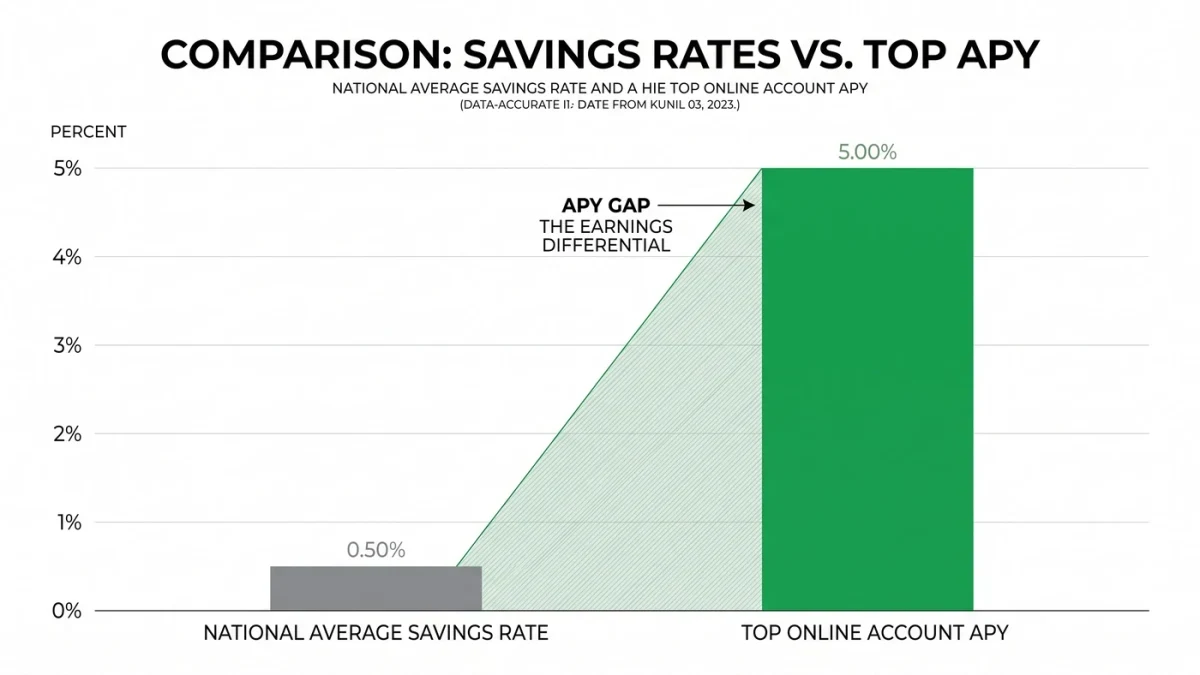
The yield differences among these placements are second-order in the documented record; the first-order property is that none of them exposes principal to equity drawdowns. An emergency fund placed in risk assets fails its defining test at the worst documented moment — the drawdown that coincides with the expense.
What are the documented criticisms?
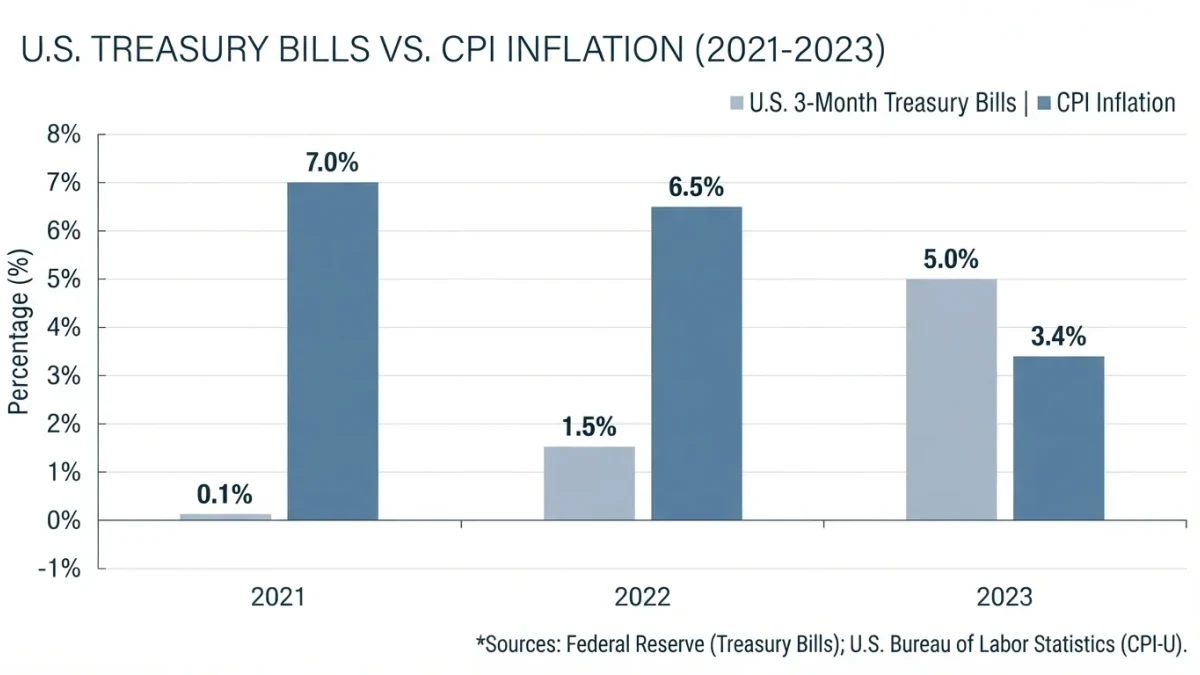
The standing criticism is opportunity cost. Over 1928 to 2023, Treasury bills compounded near 3.3 percent a year against roughly 10 percent for U.S. equities, per the Damodaran datasets at NYU Stern, and a multi-year reserve held in bills participates fully in that spread. The 2021-2022 window added a sharper version: bills returned less than inflation in both years, so the buffer's real value fell while it sat unused.
The counter-criticism is behavioral and measurable. The Federal Reserve's Survey of Household Economics and Decisionmaking has recorded, year after year, that a large minority of adults could not cover a 400-dollar emergency with cash or its equivalent — 37 percent in the 2023 survey — with documented substitutes including borrowing and selling possessions. The cost of the missing buffer is not hypothetical in that record; it is observed.
Both costs are documented and point in opposite directions, which is the honest shape of the evidence. The research does not contain a universal optimal size, and no figure in it converts into guidance for a specific household.
How does the buffer change the risk portfolio?
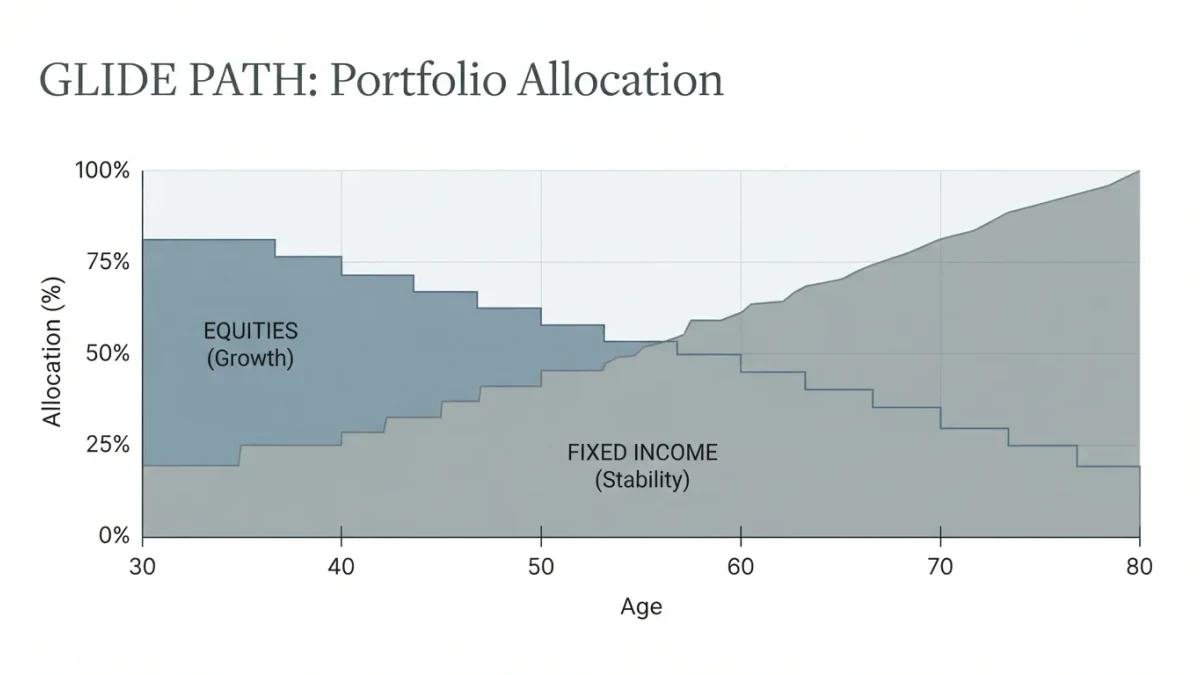
With the liquidity function outsourced to the reserve, the risk portfolio's allocation is sized to its true horizon in most framework documents. The household finance literature records the association in the field: liquid wealth and participation in risky assets move together in survey data, with the buffer cited as one of the mechanisms.
The direction of the association is documented even where its strength is debated. A funded reserve removes the most common reason for forced sales, and forced sales are the channel through which volatility becomes permanent loss. In that sense the buffer behaves like insurance priced in forgone return, with the premium documented in the return spreads above.
Two practical corollaries follow from the structure. A reserve that has been spent must be refilled before the risk portfolio's horizon can honestly be extended again; and a reserve grown far past any documented framework multiplies the opportunity-cost criticism without adding protection, since insurance against contingencies saturates once the contingency space is covered.
The allocation question the fund answers is therefore not how much to hold in total, but which layer holds which job. That division — liquidity here, risk there — is the documented core of the framework, and it survives every magnitude debate above.