
A bond ladder is a portfolio of individual bonds spaced across successive maturity dates so that principal returns in scheduled installments; a bond fund is a single pooled holding with a rolling maturity structure and a share price that fluctuates daily. In 2022 the Bloomberg U.S. Aggregate Bond Index returned minus 13.0 percent, per Bloomberg Index Services data.
Horison publishes information, not investment advice, and the choice between ladders and funds depends on individual circumstances — account type, tax position, and liquidity needs — that a reference publication cannot know. This explainer documents how each structure works, what the 2022 rate shock showed about both, and the tradeoffs recorded in practice.
How does a bond ladder work?
A ladder holds individual bonds with staggered maturities, so one rung comes due on a predictable schedule rather than all at once. When a rung matures at face value, the proceeds are placed into a new bond at the long end, keeping the structure's overall length constant. The holder receives coupon payments across all rungs plus one return of principal per interval.
An illustrative structure shows the mechanics. Assume 50,000 dollars split into five rungs of 10,000 dollars each, maturing every year from 2026 through 2030, every rung a 4-percent Treasury note bought at par and held to maturity. Under those stated assumptions, the ladder pays 2,000 dollars of coupons per year plus 10,000 dollars of principal in each maturity year; the illustration is arithmetic, not a forecast.
The defining property is that each rung carries a known maturity date. Price changes before that date do not change the amount scheduled to return, provided the issuer pays — the condition that separates price risk from default risk in every ladder document.
How do bond funds behave differently?
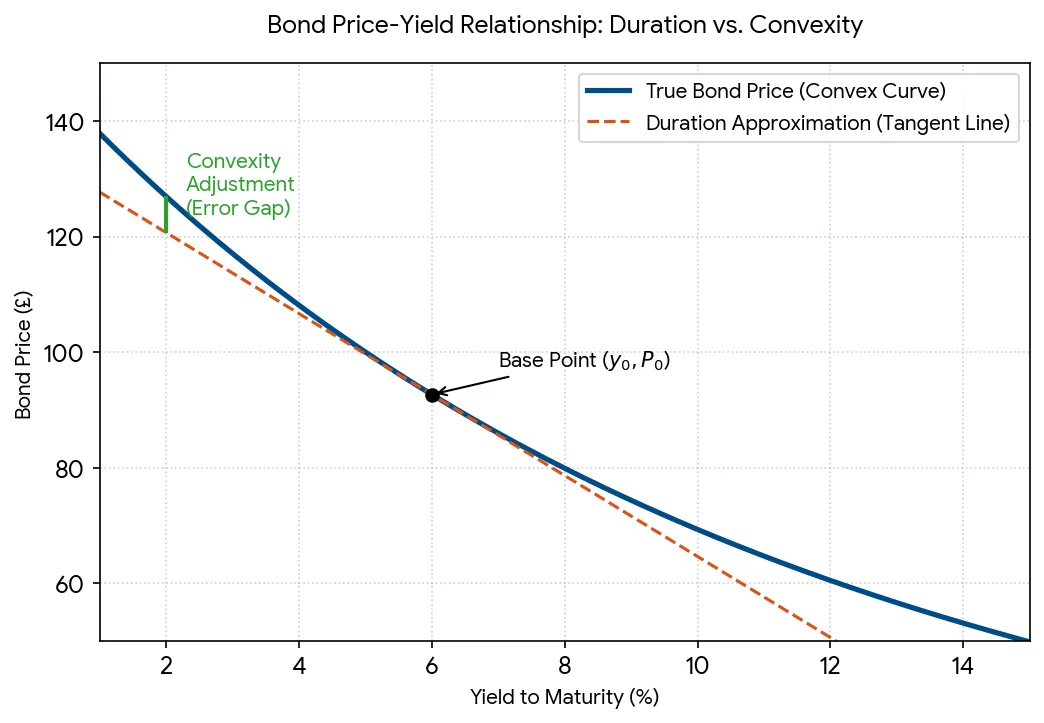
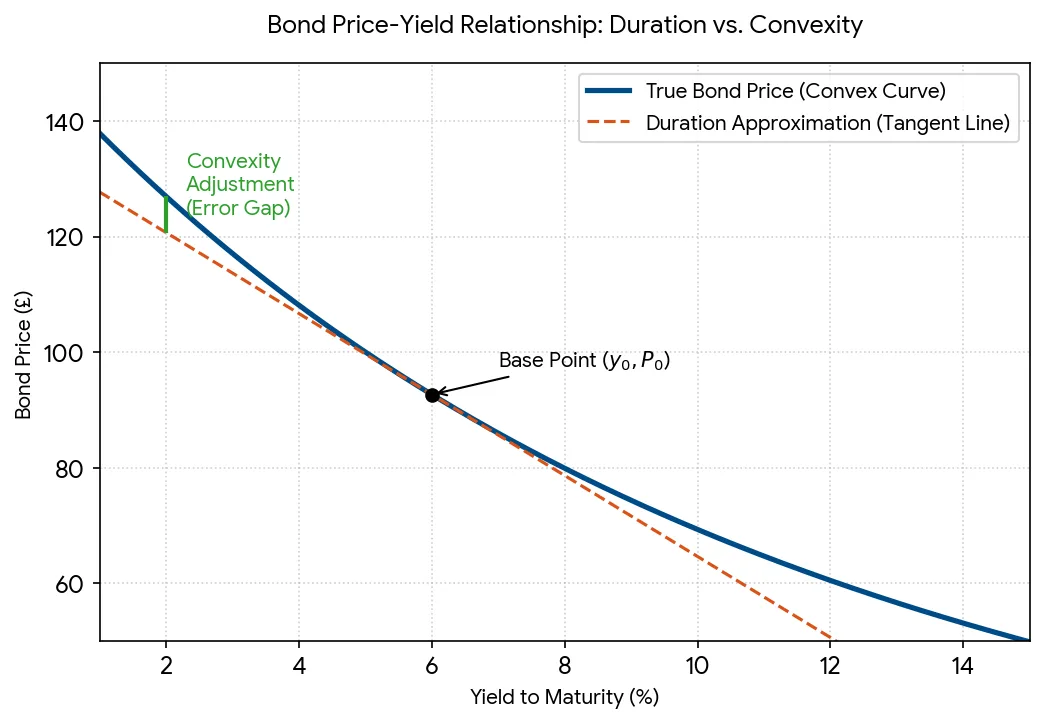
A bond fund pools thousands of issues into one portfolio with a daily net asset value. The fund never matures: as bonds age, the manager reinvests, holding average duration — the sensitivity of price to yield changes — near a stated target. The Bloomberg U.S. Aggregate, the common benchmark, carried an effective duration of roughly six years in recent index data.
Funds also embed a recurring cost. The asset-weighted average expense ratio for bond mutual funds was 0.37 percent in 2022, per the Investment Company Institute — a charge deducted from yield before it reaches the shareholder. In exchange, a single holding delivers diversification across thousands of issuers and same-day liquidity that an individual bond position may not match.
What did the 2022 rate shock show about each structure?
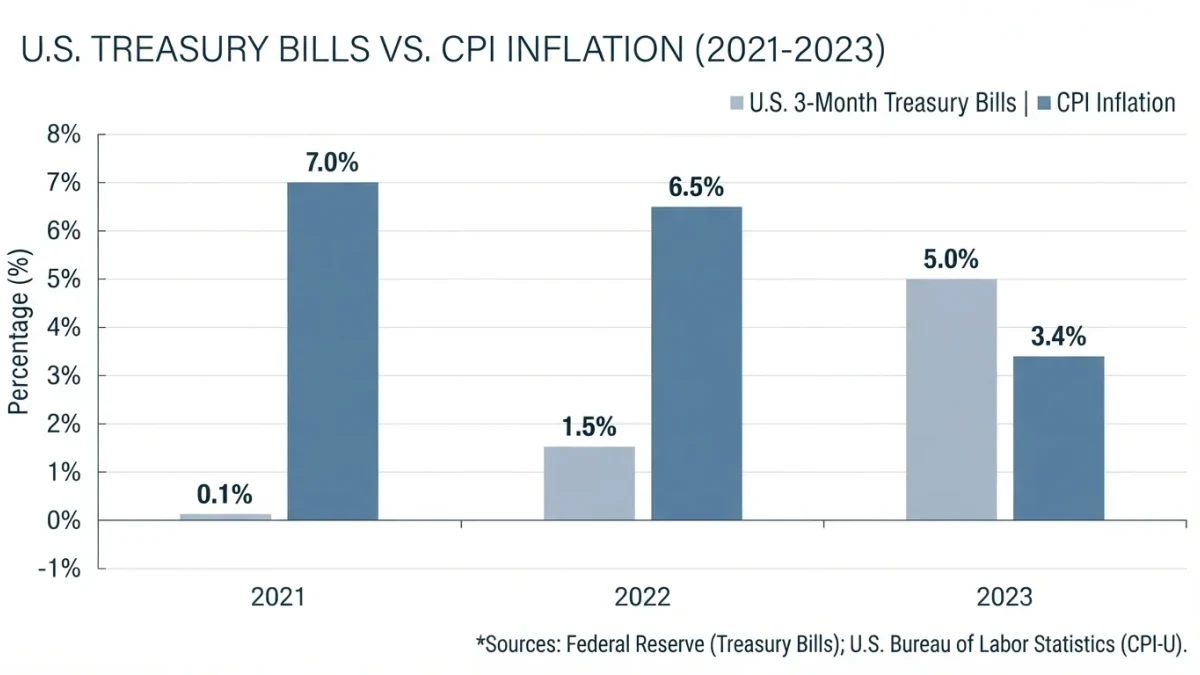
The Federal Reserve raised its policy target range by 4.25 percentage points across 2022, from near zero to 4.25 to 4.50 percent by December. The Bloomberg U.S. Aggregate returned minus 13.0 percent for the year — its worst recorded calendar year — because bond prices fall as yields rise.
Fund holders saw the decline immediately in the share price, alongside a rise in the portfolio's yield to maturity. Ladder holders saw the same mark-to-market losses on paper but a different cash path: rungs held to maturity still returned face value, while coupons kept their older, lower rates. The economics were identical; the difference was where the loss became visible and when it could be realized.
A documented nuance: a ladder removes price risk only for money that can stay invested until maturity, and only if the issuer pays. It does not remove inflation risk or default risk.
The year after the shock illustrates the recovery mechanics. In 2023 the Bloomberg U.S. Aggregate returned 5.5 percent as prices stabilized, and every rung that matured during the year was reinvested at the higher yields set after 2022. Funds recorded the same repricing through their yield to maturity rather than through scheduled maturities — a timing difference, not a different economic outcome.
How do the documented tradeoffs line up?
| Dimension | Bond ladder | Bond fund |
|---|---|---|
| Capital structure | Dated principal repayments; each rung ends on schedule | Perpetual; principal represented by redeemable shares |
| Income behavior | Coupons fixed at purchase; proceeds reinvested at whatever rates prevail at each maturity | Distribution varies with portfolio yield, rising and falling with rates |
| Duration path | Shortens toward each maturity, then resets when extended | Held near target indefinitely |
| Credit exposure | Concentrated in the chosen issuers unless many rungs are used | Broad, across thousands of issues |
| Documented criticisms | Opportunity cost between maturities; wider retail spreads on corporate and municipal rungs; reinvestment risk at each rollover | Price risk never rolls off; fee drag compounds; losses are locked in if shares are sold after a rate rise |
Which practical frictions matter?
Access costs differ by channel. Treasury securities can be bought at auction in 100-dollar minimums through TreasuryDirect or a brokerage, with no auction fee through the government channel. Corporate and municipal bonds trade over the counter, where retail spreads are wider than institutional spreads — a documented friction that favors funds for smaller accounts.
Brokered certificates of deposit are a common rung substitute, carrying early-withdrawal penalties documented in their terms. Funds add tax-reporting simplicity — one consolidated form rather than per-bond schedules — plus automatic reinvestment of distributions. Ladders add control over exactly which maturities are held and precisely when principal returns.
Two documented limits close the comparison. A ladder built from few issuers concentrates default risk in a way a broad fund does not, and a fund's convenience does not change the arithmetic that its duration, unlike a ladder's, never shortens toward a maturity date.
How do the structures handle reinvestment and recordkeeping?
Reinvestment happens on different clocks. A ladder reinvests only when a rung matures, so its yield moves toward market rates in steps, one maturity at a time; a fund reprices continuously as the manager rolls holdings and as distributions compound. Neither clock is adjustable after purchase — the rung dates and the fund's target are fixed design choices.
Recordkeeping favors the fund in documented practitioner accounts. A fund reports one annual distribution figure per account, while individual bonds can generate schedules of coupons, premium amortization, and discount accretion that vary by lot. In tax-advantaged accounts the difference largely disappears, because those reporting mechanics do not change the after-tax outcome inside the wrapper.
These are mechanical differences, not a ranking. Frameworks that prefer ladders cite the dated principal schedule; frameworks that prefer funds cite breadth and continuous repricing. The recorded 2022-2023 sequence shows both properties operating at the same time on the same rate path.