
An investing news routine is a fixed, repeatable way of deciding which market headlines deserve attention and which do not. The routine matters more than any single story, because most daily financial news describes short-term price movement rather than anything that changes a long-term plan. A good routine protects two things at once: the quality of the information reaching you, and the discipline of the portfolio behind it.
The core idea is simple. Filter first, read second. Decide in advance which sources you trust, which data releases actually affect your holdings, and how often you will look. Everything else is optional. This article sets out a practical structure for that filter, how to read a market story once it passes, and how to keep news consumption from turning into overtrading.
Why does most market news not matter to a long-term portfolio?
Most daily headlines report what prices already did. A market rose or fell; a stock beat or missed expectations; a currency moved. For a long-term investor, that information is largely backward-looking. Prices move constantly, and a portfolio built around allocation and diversification is designed to absorb that movement without action. Reading every move invites a simple error: treating information as a signal that something must be done.
The news that tends to matter is different in kind. Scheduled economic releases, changes to fund fees, tax and regulatory shifts, and central bank decisions can change what a portfolio should hold, not just what it is worth today. A useful routine separates these two categories on sight. Ask one question of any headline: does this change the facts my plan depends on, or only the price I would pay today? If the answer is only the price, the story can usually wait.
What does a filter-first routine actually look like?
A workable routine has four fixed parts. Each part is decided once, in advance, so that no daily decision is left to impulse.
- Fixed sources. Choose a small number of outlets and primary sources, and stick to them. For economic data, prefer the original publisher: statistical agencies, central banks, and regulators publish the underlying figures before any commentary does.
- Fixed schedule. Check news at set times, for example once daily or a few times a week. Constant checking adds stress and adds no information; prices move by the minute, but the facts that matter move slowly.
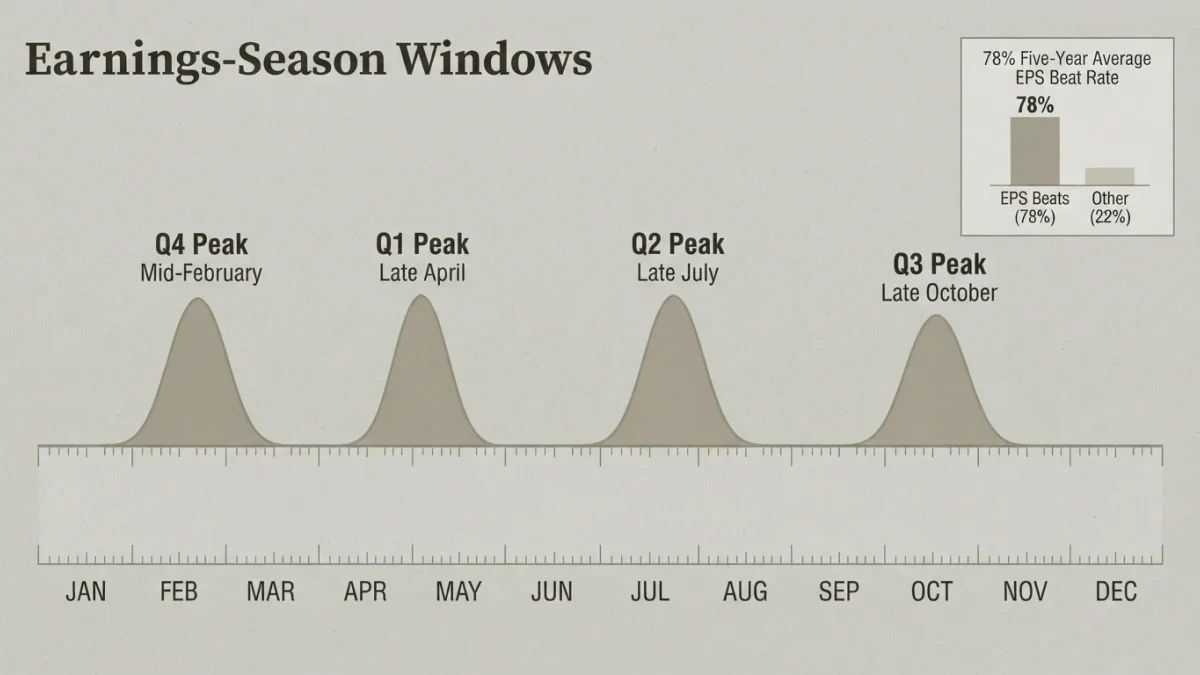
- A relevance list. Write down the data releases and event types that genuinely touch your holdings, such as scheduled rate decisions or earnings seasons for stocks you follow. Everything outside the list is skippable by default.
- A written action rule. Decide in advance what news would actually prompt a change, and what would not. For most long-term plans, the honest answer is that almost no daily headline does; rebalancing on a schedule handles drift without news input.
This structure mirrors how scheduled data works in practice. For example, employment reports move stock and bond markets in predictable ways, which is why knowing the release calendar matters more than reacting to the headline number. A closer look at How Jobs Reports Move Stock and Bond Markets shows how a scheduled release can be prepared for in advance rather than reacted to after the fact.
How do you read a market story once it passes the filter?
When a story clears the filter, read it in a fixed order. First, identify the source of every number. A percentage without a period, a base, and a named source is decoration, not evidence. Second, distinguish fact from interpretation. The fact might be that a central bank changed its policy rate; the interpretation is what that means for asset prices, and commentators disagree about it constantly.
Third, check the framing. Stories about market moves often imply urgency that the underlying data does not support. A drop in an index may be described as a rout; by historical standards it may be an ordinary fluctuation. Reading a piece such as What a Market Correction Means by the Numbers helps calibrate that sense of scale, because corrections have defined thresholds rather than vibes.
Fourth, note what the story does not say. Volatility measures are a good example: a rising volatility index tells you option markets expect larger swings, not that a crash is coming. Misreading that distinction is one of the most common ways headlines push people into trades they later regret. Our analysis suggests that the reading order matters less than the habit of asking, for every claim, who is the named source and what is the stated period.
How does a news routine connect to portfolio decisions?
The connection should be thin by design. A long-term plan rests on allocation, diversification, and cost control, not on reaction speed. News enters the picture in a few defined places: confirming that the assets you hold still match your reasons for holding them, tracking scheduled events you have listed as relevant, and supplying context when you review the plan on its own calendar.
Scheduled contributions are a case in point. Dollar-cost averaging works precisely because it removes the timing decision from the news cycle; the purchase happens on the calendar, not on the headline. A reader who automates contributions and rebalances on a schedule can afford to ignore most daily coverage entirely. That is the practical payoff of the filter: the less your plan depends on reaction, the less news volume you need to process.
Where news genuinely does feed decisions, keep the chain of reasoning explicit. If a fee change on a fund you hold is reported, the relevant question is whether the fee still fits the plan, not whether the fund is in the news. If flows into a new asset class are reported, the question is whether the asset fits your allocation framework at all. Coverage of spot bitcoin ETF flows, for instance, is best read as data about a category rather than a prompt to act; the same discipline applies as with any other asset, and the volatility of crypto assets deserves its own caution, since they can lose most or all of their value quickly.
What are the practical steps to set this up this week?
The setup takes an hour or two and no special tools.
- Write your relevance list: the releases and event types that touch your holdings, with their usual schedules.
- Pick two or three trusted sources, including at least one primary source such as a regulator or central bank publication.
- Set fixed check-in times and close everything else. Uninstall or mute feeds that push market headlines continuously.
- Write your action rule: what would prompt a portfolio change, and what would not. Be specific and be honest; for most plans the list is short.
- Keep a short log for a month: headlines you saw, whether you acted, and why. The log usually shows that very little news led to action, which is the point.
Two limitations follow. First, a filter tuned too tightly can screen out genuinely relevant regulatory or tax changes, so review the relevance list itself a few times a year. Second, no routine removes uncertainty; it only removes the illusion that reading more reduces it.
The takeaway: filter first, act rarely
A personal investing news routine is a filtering system, not a reading list. Its purpose is to route the small share of news that can change a long-term plan to you quickly, and to let the rest pass. Fixed sources, a fixed schedule, a relevance list, and a written action rule do that work. The evidence of practice is consistent with a plain conclusion: investors who decide in advance what would move them act less often and with more reason when they do. What remains unknown for any individual is the right relevance list and the right cadence, and those depend on circumstances the reader, not the publication, is positioned to judge.
Sources: crazygames.com · topgames.gg