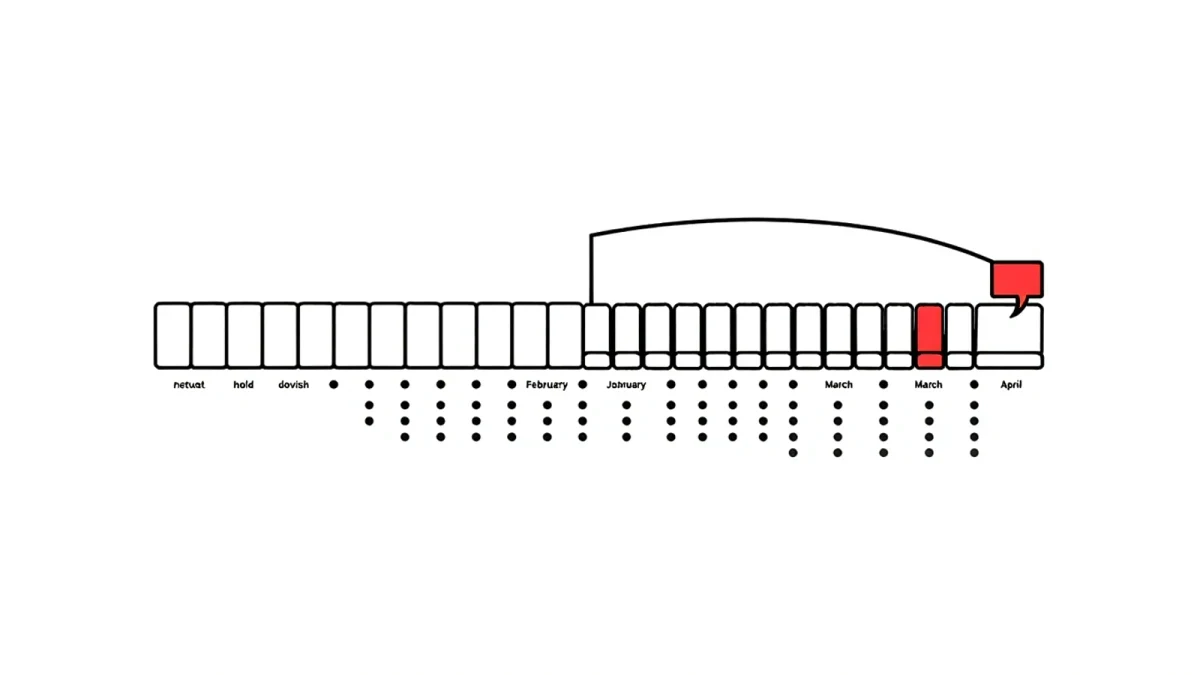

The Federal Open Market Committee (FOMC) left the federal funds target range unchanged at 3.50 to 3.75 percent on January 28, 2026, per the Federal Reserve's statement — the first hold after three quarter-point cuts in late 2025 and the first meeting without a change since July 2025. The vote was 10-2, with two governors preferring a quarter-point cut.
The decision is covered here for its educational content — what a hold communicates and how dissents are read — not as a view on what anyone should hold or trade.
What changed in the January 2026 decision?
Mechanically, nothing: the target range stayed where the December 2025 cut had set it. Federal Reserve policy records show quarter-point reductions effective September 18, October 30, and December 11, 2025, which took the range from 4.25–4.50 percent down to 3.50–3.75 percent. January 28, 2026 was the first meeting since July 2025 at which the committee made no move.
The statement's economic language shifted in tone. The committee described activity as expanding at a solid pace, said job gains had “remained low,” noted unemployment “shows signs of stabilizing,” and judged that inflation “remains somewhat elevated” — all direct quotations from the January 28, 2026 statement.
What did the dissents mean?
Stephen Miran and Christopher Waller dissented, each preferring a quarter-point cut, per the Federal Reserve's voting record. A dissent is a recorded disagreement with the committee's action, not a veto; the policy outcome stands while signaling that the room is divided. A 10-2 split with dovish dissents tells readers the cut camp was close enough to register, which is the kind of detail markets parse when pricing future meetings.
How did markets respond?
Reaction was concentrated in rates, per January 28, 2026 coverage. The 10-year Treasury yield climbed to around 4.25 percent and the 2-year to about 3.58 percent after the decision, per Reuters. Stocks wavered and the dollar held steady, per The Wall Street Journal. Chair Jerome Powell described the economy as on a “firm footing” at his press conference, per CNBC.
The concept this episode illustrates: a hold is a decision, not an absence of one. When the statement language, the dissent pattern, and market repricing all shift around an unchanged number, the lesson is that policy communication works through several channels at once.