
The U.S. economy added 50,000 nonfarm payroll jobs in December 2025, and the unemployment rate edged down to 4.4 percent, the Bureau of Labor Statistics (BLS) reported on January 9, 2026. The release also revised October and November payrolls down by a combined 76,000 jobs, leaving a picture of slower hiring.
Employment statistics summarize past labor-market conditions and cannot indicate what any investor should buy or sell; this article explains what the December report contained and how it is compiled.
What did the December 2025 jobs report show?
Nonfarm payrolls increased by 50,000 in December, a change the BLS described as little changed. The unemployment rate was 4.4 percent, down from 4.5 percent in November, with 7.5 million people unemployed. The labor force participation rate held at 62.4 percent, and the employment-population ratio was 59.7 percent.
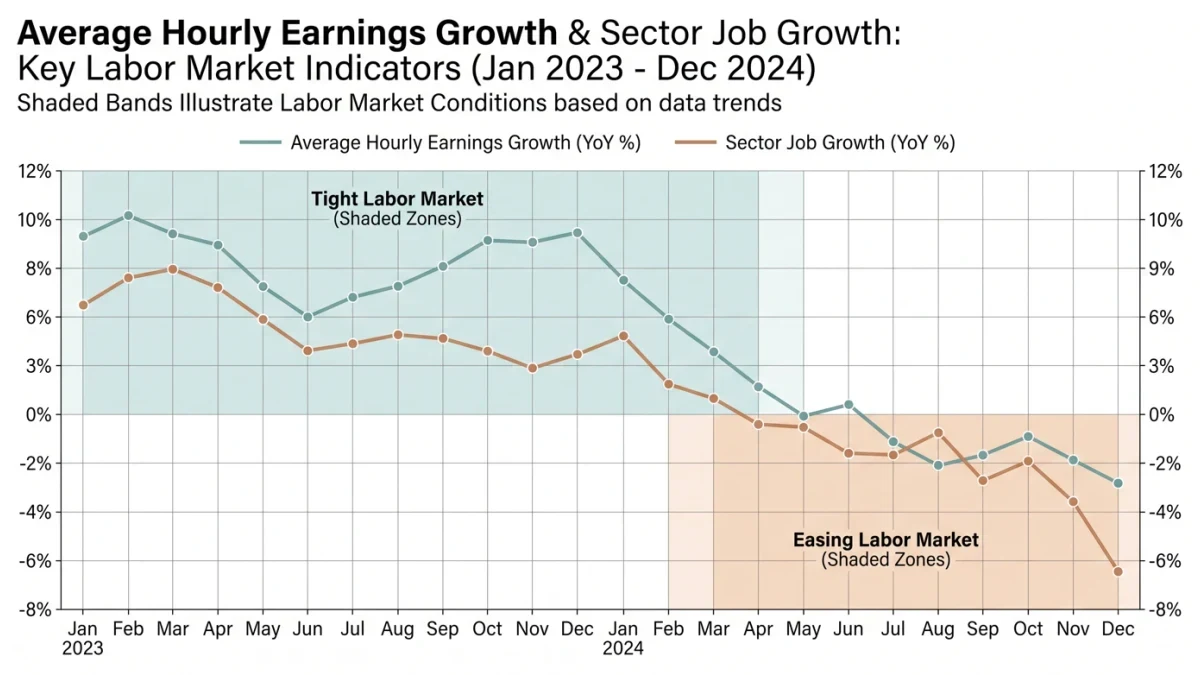
Average hourly earnings rose 12 cents, or 0.3 percent, to $37.02 in December and were up 3.8 percent over the 12 months ending in December, per the BLS release. Per CNBC reporting from January 9, 2026, the unemployment reading came in below the 4.5 percent figure forecasters anticipated.
Which sectors added and lost jobs?
Gains concentrated in services. Food services and drinking places added 27,000 jobs, health care added 21,000 (including 16,000 in hospitals), and social assistance added 17,000. Electronics and appliance retailers gained 5,000. Retail trade cut 25,000 jobs overall, including 19,000 in warehouse clubs, supercenters, and general merchandise stores.
Federal government employment was little changed at plus 2,000, but it stood 277,000, or 9.2 percent, below its January peak, reflecting the reduction in federal payrolls that followed, per the BLS.
What did the revisions change?
October 2025 payrolls were revised down by 68,000, from minus 105,000 to minus 173,000, and November was lowered by 8,000, from plus 64,000 to plus 56,000. The November unemployment rate was revised from 4.6 percent to 4.5 percent as part of annual seasonal-adjustment updates reaching back to January 2021.
The release carried shutdown-related caveats. Household survey data were not collected for October 2025 because of the lapse in federal appropriations, so fourth-quarter household estimates and 2025 annual averages exclude that month. The BLS said its survey returned to the usual composite weighting methodology in December and that annual benchmark revisions were delayed to the February and March 2026 releases.