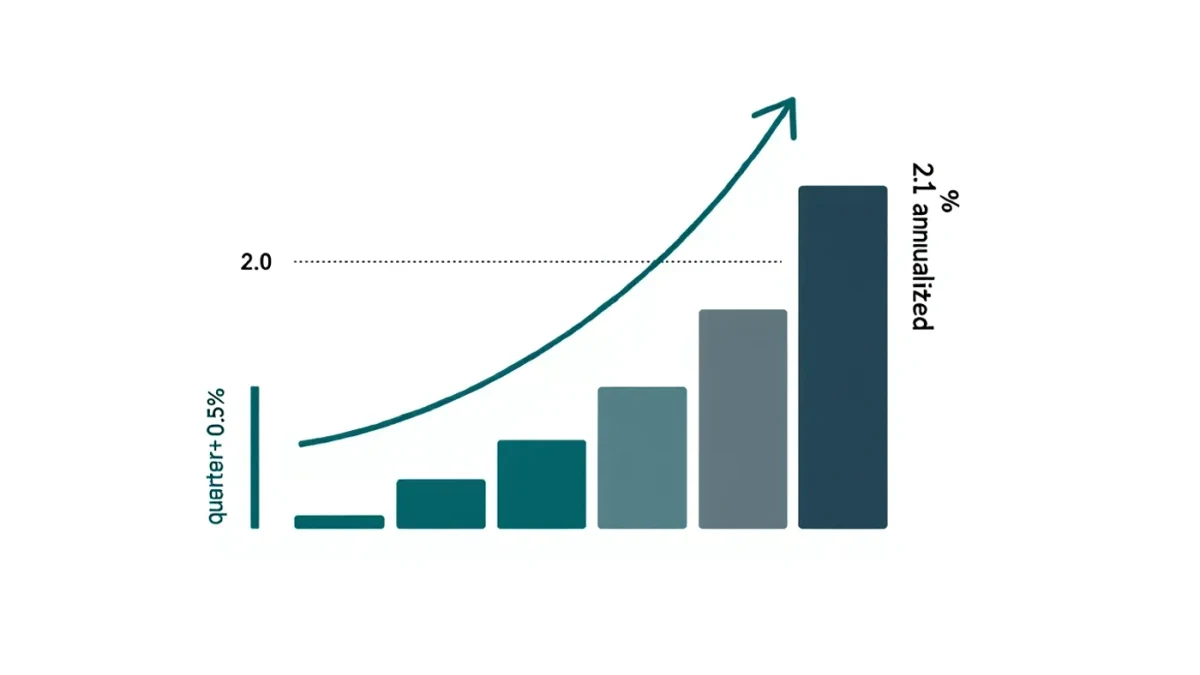

Real gross domestic product grew at a 2.1 percent annual rate in the first quarter of 2026, the Bureau of Economic Analysis (BEA) reported in its third estimate on June 25, 2026. The reading was revised up half a point from 1.6 percent, after a 2.0 percent advance estimate — a path showing how GDP readings move as data arrive.
GDP vintages describe measured past output; they carry no message about what anyone should own, and each reading is an estimate the BEA itself revises.
What did the three Q1 2026 estimates show?
The BEA publishes three regular vintages for each quarter. The advance estimate put Q1 2026 growth at 2.0 percent; the second estimate lowered it to 1.6 percent; and the third estimate, released June 25, 2026, raised it to 2.1 percent. For context, the same release put Q4 2025 growth at 0.5 percent, so the first quarter marked a pickup from the turn of the year.
The price measures moved less. The gross domestic purchases price index rose 3.6 percent in the quarter, the PCE price index rose 4.6 percent, and core PCE excluding food and energy rose 4.4 percent, per the June 25, 2026 release.
What revised the Q1 figure upward?
Per the BEA, the upward revision mainly reflected a downward revision to imports, which count as a subtraction in GDP arithmetic, partly offset by a downward revision to consumer spending. The revision drew on the annual update of the International Transactions Accounts and Census Quarterly Services Survey data.
Growth itself came from investment, exports, government spending, and consumer spending. By industry, government value added rose 7.5 percent, private goods-producing industries rose 4.5 percent, and private services-producers rose 0.8 percent. Profits from current production increased $74.4 billion in the quarter, revised up $34.0 billion from the prior estimate.
How do advance estimates differ from later vintages?
The advance estimate lands roughly four weeks after a quarter ends, while much of the quarter's source data — trade documents, surveys, tax records — is still incomplete, so the BEA extrapolates. The second and third estimates replace those projections with actual data, which is why a half-point revision, while unusually large for a third estimate per Haver Analytics' June 2026 analysis, fits the design of the process rather than an error in it.
Two calendar facts complete the picture. The BEA's comprehensive annual update of national, industry, and regional data begins September 30, 2026, and the next regular release, the Q2 2026 advance estimate, was scheduled for July 30, 2026, per the June 25 release.