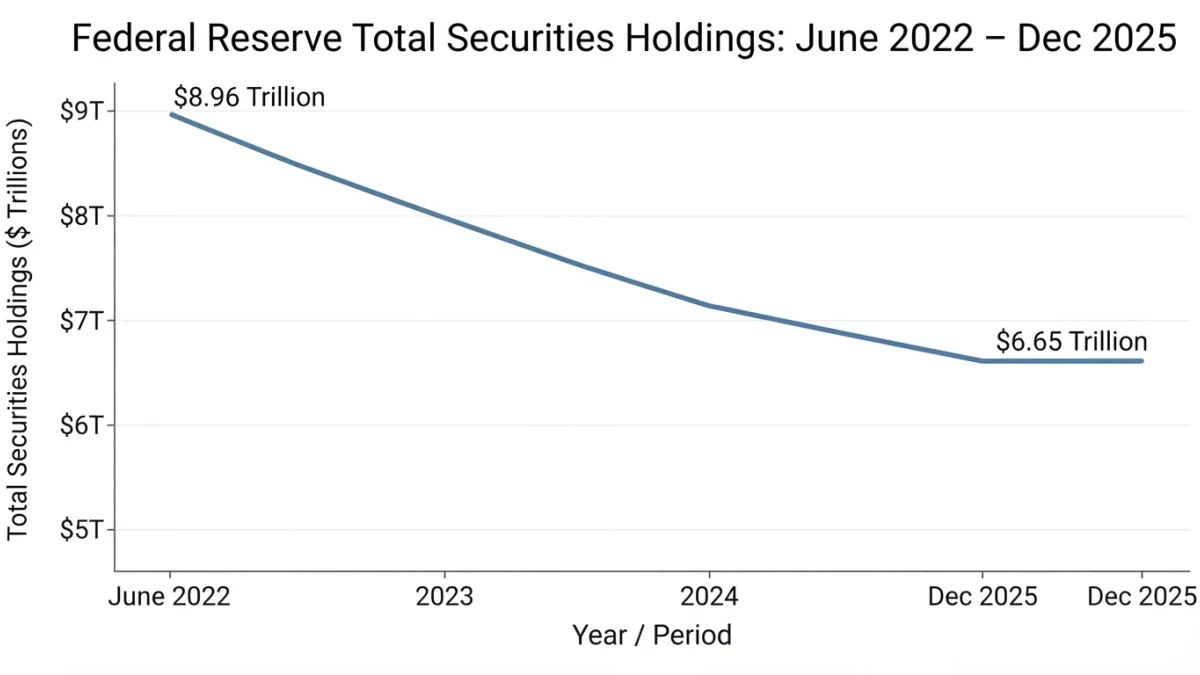
The Federal Reserve stopped shrinking its balance sheet on December 1, 2025, ending the runoff phase of quantitative tightening (QT) that began in June 2022. Securities holdings fell by more than $2.2 trillion over the period, per Federal Reserve policy normalization records, and the October 29, 2025 decision directed reinvestment of all maturing principal.
Balance sheet mechanics describe central bank operations; they imply nothing about what any reader should hold, and reserve levels depend on conditions the Federal Reserve monitors continuously.
What did the Fed announce in October 2025?
On October 29, 2025, the Federal Open Market Committee (FOMC) announced it would cease the runoff of its securities holdings starting on December 1, 2025. The New York Fed's trading desk was directed to roll over at auction all principal payments from Treasury holdings and to reinvest principal payments from agency debt and agency mortgage-backed securities (MBS) into Treasury bills.
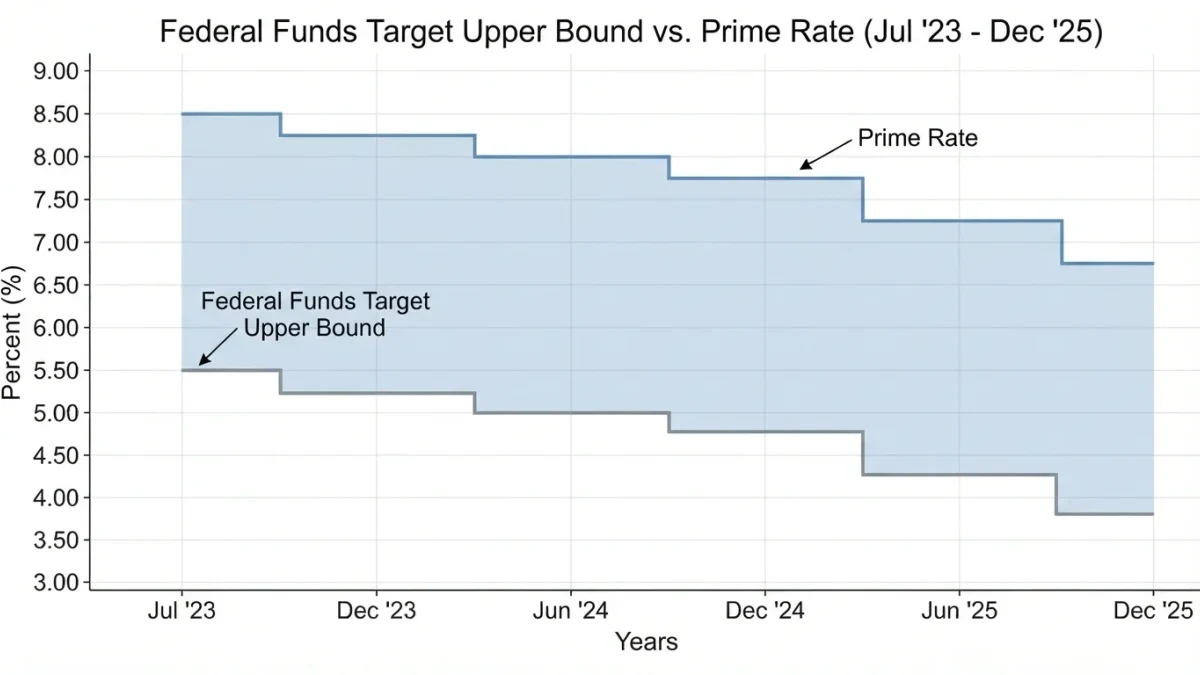
The decision accompanied a rate cut and a reduction in the interest rate paid on reserve balances, per Reuters reporting from October 29, 2025, which described the end of the drawdown of the roughly $6.6 trillion balance sheet amid signs of money market stress.
How large was the runoff, and what caps applied?
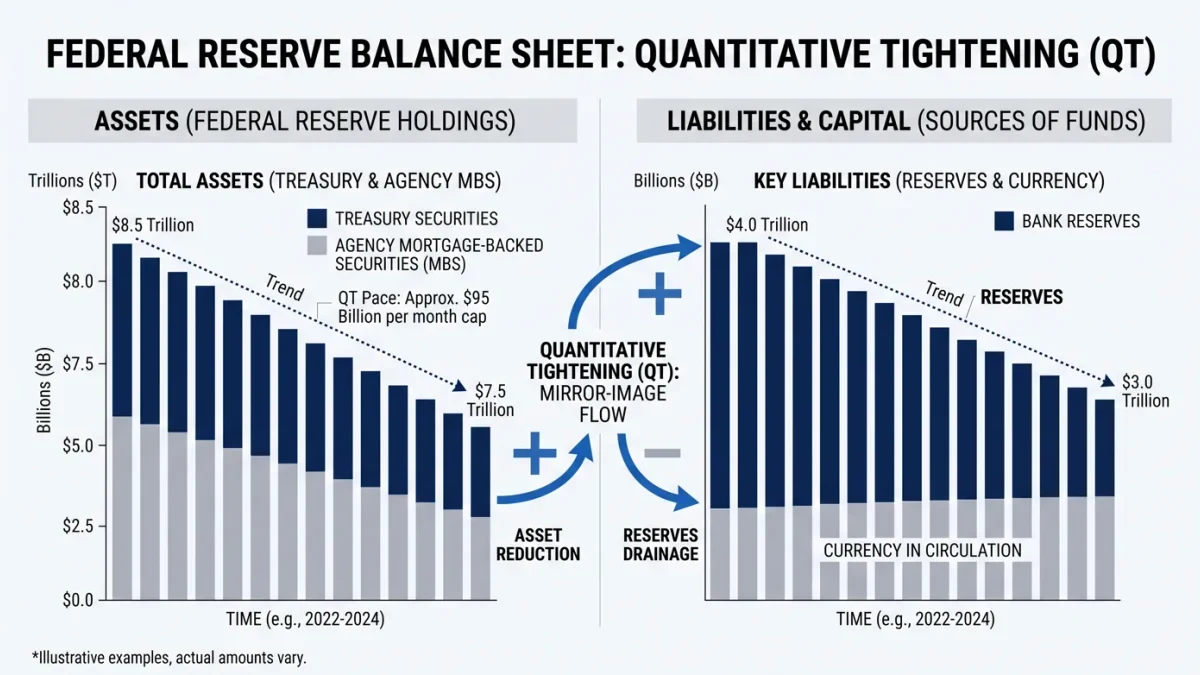
Runoff began in June 2022 with monthly redemption caps of $30 billion for Treasuries and $17.5 billion for agency securities, stepping up to $60 billion and $35 billion after three months, per the Federal Reserve. The Treasury cap was later reduced to $25 billion in June 2024 and to $15 billion from April 2025, per FOMC statements of May 1, 2024, and December 18, 2024.
From peak to end, total securities holdings fell by more than $2.2 trillion, including about $1.6 trillion in Treasuries and $600 billion in agency MBS, and holdings dropped from 33 percent to 20 percent of nominal GDP, per the Federal Reserve. The Congressional Research Service noted in its report IF12147 that QT ended with only about half of the pandemic-era balance sheet growth reversed.
What happens to the balance sheet after runoff ends?
Two mechanical changes follow. First, maturing Treasury principal is rolled over at auction, and agency MBS principal now moves into Treasury bills, gradually tilting the portfolio's composition. Second, reserve balances were expected to keep declining for a time even after runoff stopped, because other items on the Fed's balance sheet, such as currency in circulation, keep growing.
The Committee stated it will manage securities holdings as needed to maintain ample reserves over time. Weekly figures appear in the H.4.1 release, published each Thursday at 4:30 p.m. ET, which remains the primary public record for tracking where the balance sheet stands.