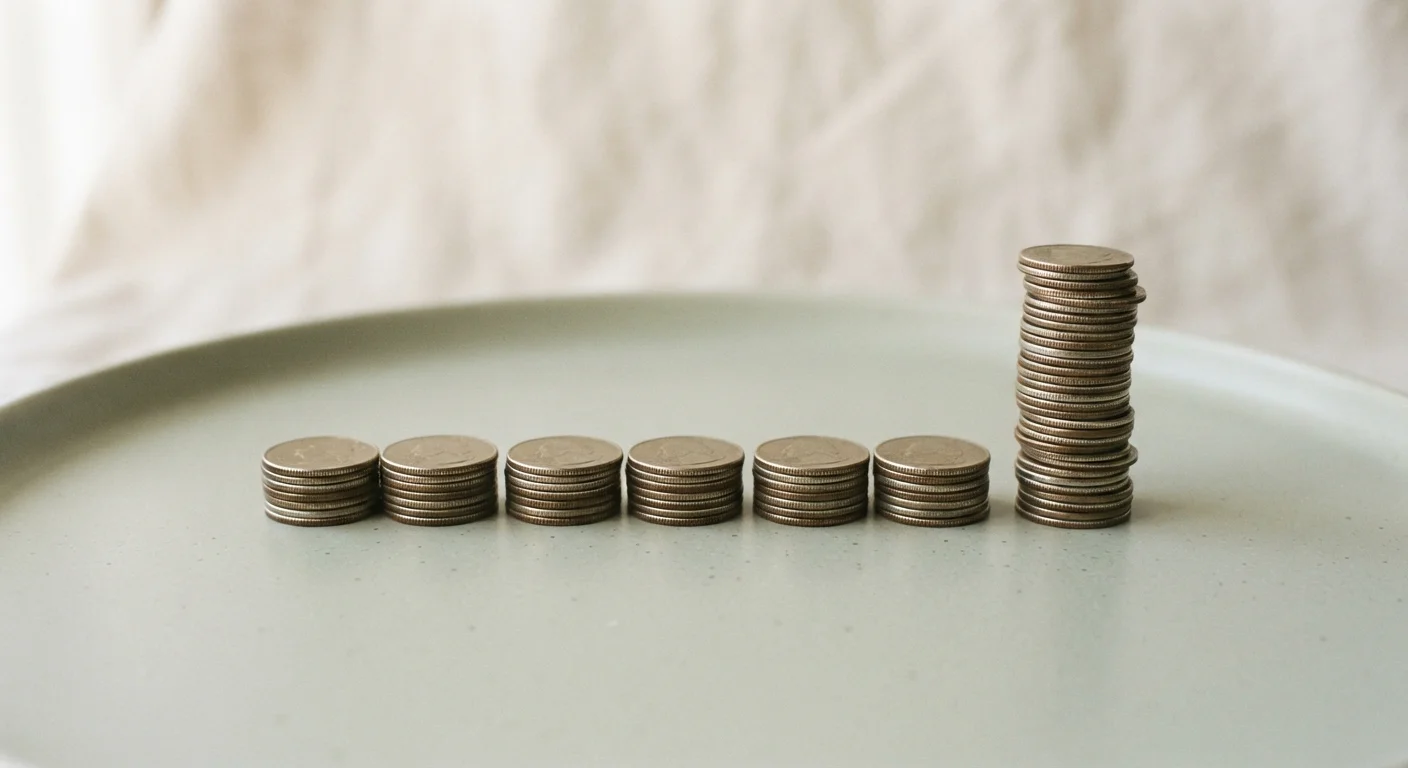

Compound interest is interest calculated on both the original deposit and on interest already earned, so the balance grows faster each period. The word traces to the Latin componere, "to put together": each interest payment is put on top of the last. The most important qualification is that the effect depends entirely on time — the longer money stays invested, the larger the gap between simple and compound growth becomes.
The mechanics are simple. With simple interest, a $1,000 balance earning 5% pays $50 every year, forever. With compound interest, the second year's payment is calculated on $1,050, not $1,000, so it comes to $52.50. The third year is calculated on $1,102.50. Nothing dramatic happens in year one. Everything happens in year twenty.
What does compounding look like in numbers?
A worked example makes the pattern visible. According to The Calculator Site, a $1,000 investment earning 5% compounded yearly produces this schedule:
| Year | Interest earned | End balance |
|---|---|---|
| 1 | $50.00 | $1,050.00 |
| 2 | $52.50 | $1,102.50 |
| 3 | $55.13 | $1,157.63 |
| 5 | $60.78 | $1,276.28 |
| 10 | $77.57 | $1,628.89 |
Read the interest column down, not across. It rises every single year — $50, then $52.50, then $55.13 — because each payment is calculated on a bigger base. Over ten years the balance reaches $1,628.89 without a single additional deposit. The growth is not linear; it accelerates.
How does time in the market outweigh timing?
Compounding rewards duration far more than it rewards clever entry points. The Calculator Site's worked example of a $5,000 deposit earning 5% compounded monthly shows the effect at modest scale: after five years the balance is $6,416.79, of which $1,416.79 is interest. The same source notes that at that rate, the time needed to double the investment is 13 years and 11 months — and that doubling happens without any skill at choosing the moment to invest.
The practical implication follows from the arithmetic, not from any forecast. An investor who starts ten years earlier does not simply get ten more years of returns. Those early years sit at the base of the entire stack, earning interest on interest for decades. Late contributions never catch up, because they lack the accumulation history underneath them. This is why the common framing — time in the market beats timing the market — is a statement about arithmetic rather than a slogan.
Two levers amplify the effect. Regular contributions give each new deposit its own compounding clock; a strategy such as What Dollar-Cost Averaging Means and How It Works describes how steady investing works alongside this. Compounding frequency matters too: interest compounded monthly grows slightly faster than interest compounded yearly at the same nominal rate, because interest starts earning interest sooner.
What is the difference between nominal and effective rates?
Compounding introduces a distinction that simple interest never needs. The nominal rate is the stated yearly rate before compounding. The effective rate — often shown as APY on savings products — is what the balance actually earns after compounding is included. In the Calculator Site's example, a 5% nominal rate compounded monthly produces an effective rate of 5.12%. The gap looks trivial. It is not, once the balance and the holding period grow.
The same logic runs in reverse on borrowed money. A loan's effective cost exceeds its nominal rate whenever interest compounds more often than once a year. Reading the effective figure, not the headline figure, is the habit that keeps comparisons honest on both sides of the balance sheet.
What are the limits of the compound-interest story?
Three limitations deserve equal weight.
- Compounding is not guaranteed growth. The worked examples assume a fixed rate. Real investments do not deliver fixed rates; returns vary, and some years are negative. Compounding describes how growth accumulates when it occurs, not a promise that it will.
- It cuts both ways. Debt compounds exactly as savings do, and unpaid credit balances grow on the same accelerating curve. Fees compound too — the drag from charges grows over a holding period just as returns do, a dynamic covered in How Expense Ratios Compound Over Time.
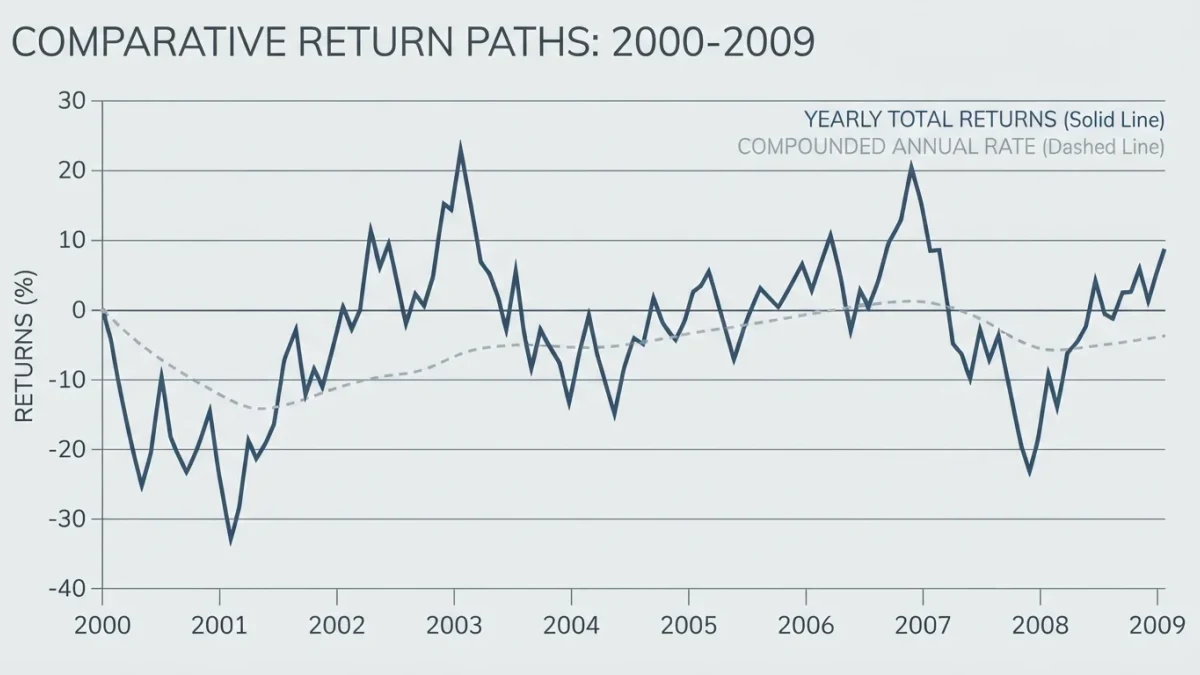
- Averages mislead. A single average growth rate over a long period hides the path taken. The distinction between average and actual compounded growth is examined in What CAGR Means and When It Misleads.
There is also an inflation caveat. A balance that doubles in nominal terms has not doubled in purchasing power if prices rose over the same period. Compounding calculations quoted without inflation are statements about dollars, not about what those dollars buy.
How should a beginner put compounding to work?
The steps are unglamorous, which is the point.
- Start as early as circumstances allow. Duration is the input compounding rewards most, and even small early amounts benefit from it.
- Contribute on a schedule. Regular deposits extend the snowball metaphor the Calculator Site uses: each contribution starts earning its own interest.
- Compare effective rates, not nominal ones, when evaluating savings products — and note compounding frequency.
- Keep costs low. Expenses compound against the balance with the same relentlessness that returns compound for it.
- Leave the balance alone. Withdrawals reset the base, and the largest interest payments come from the years that were never interrupted.
None of this amounts to advice about how much to invest or where. Compounding is a mechanism, not a recommendation, and the right use of it depends on individual circumstances — income, debts, time horizon, and tolerance for losses — that no general article can know.
The takeaway
Compound interest is arithmetic with a memory. Every period's gain is folded into the base, so growth accelerates as long as it continues — and the same mechanism works on debt, fees, and inflation. The evidence in the worked examples establishes what the mechanism does at fixed rates. What no example can establish is the rate any particular investment will deliver, which is why the honest version of this lesson ends with the assumptions showing, not hidden.
For more foundations of this kind, the site's education section collects explainers on accounts, orders, and fund documents.