A spot bitcoin exchange-traded fund is a regulated wrapper that holds bitcoin and trades on stock exchanges, while direct holding means owning coins in a wallet under the investor's or a custodian's control. On January 10, 2024, the SEC approved 11 spot bitcoin exchange-traded products, ending a decade of rejections and reshaping how most investors can reach the asset.
Both routes carry the same underlying exposure to bitcoin's price. Crypto assets can lose most or all of their value quickly, and a regulated wrapper does not soften that exposure.
What Do You Actually Own in Each Case?
Direct holding is ownership of the asset itself: the holder controls, through private keys or a custodial account, a quantity of bitcoin recorded on the blockchain. A spot fund is a security that confers a claim on a pool of coins held by the fund's custodian. The holder of fund shares owns no coins outright and controls no keys. That distinction is the root of every other difference in costs, taxes, and access.
The structure is conventional. Each approved product is a trust that issues shares, with an authorized-participant mechanism creating and redeeming shares against bitcoin, which keeps share prices close to the coins' value. Most of the 2024 filings named Coinbase Custody as the trust's custodian. Shareholders rely on the sponsor, the custodian, and the exchange listing, the same institutions conventional funds rely on, rather than on the blockchain's own settlement.
How Do Costs Compare?
The fund route pays an explicit annual expense ratio and trades like any exchange-listed share, while the direct route pays per-transaction costs and, in self-custody, no ongoing management fee. The 2024 prospectuses showed annual fees from 0.19 percent to 1.5 percent across approved products. The direct route's costs are spread across exchange trading fees, bid-ask spreads, and withdrawal fees, which vary by venue and order size.
| Cost element | Spot bitcoin fund | Direct holding |
|---|---|---|
| Ongoing fee | 0.19%-1.5% per year (2024 prospectus range) | None (self-custody) or custody-service fee |
| Trading costs | Commission-free at most brokers; bid-ask spread | Exchange fees typically 0.1%-0.6%; spreads |
| Transfer costs | None; transfers are account transfers | Network fees per on-chain transaction |
| Cost behavior | Predictable, percentage-based | Lumpy, transaction-based |
Which structure costs more over a given period depends on holding size, trading frequency, and the specific products and venues used, so no universal ranking holds. The documented difference is the shape of the costs, not their total.
How Do Taxes and Reporting Differ?
The Internal Revenue Service has treated bitcoin as property since its 2014 guidance (Notice 2014-21), which makes every direct sale, spend, or exchange between coins a reportable disposal. Fund shares sit inside standard brokerage accounts, where proceeds report on the forms brokers already issue. Both routes owe tax on gains under the same property framework; what differs is the reporting plumbing around the investor.
Two documented differences follow from that plumbing. First, broker reporting on direct crypto sales began phasing in from January 1, 2025 under the Form 1099-DA regime finalized in 2024, closing part of a gap that previously left direct holders self-reporting everything. Second, the wash-sale rule's application has differed: the rule as written applies to securities, which fund shares are, while its application to directly held crypto remained a drafting question as of early 2026. Tax outcomes depend on individual facts, and this site does not resolve them; official IRS publications are the reference.
How Do Custody and Access Differ?
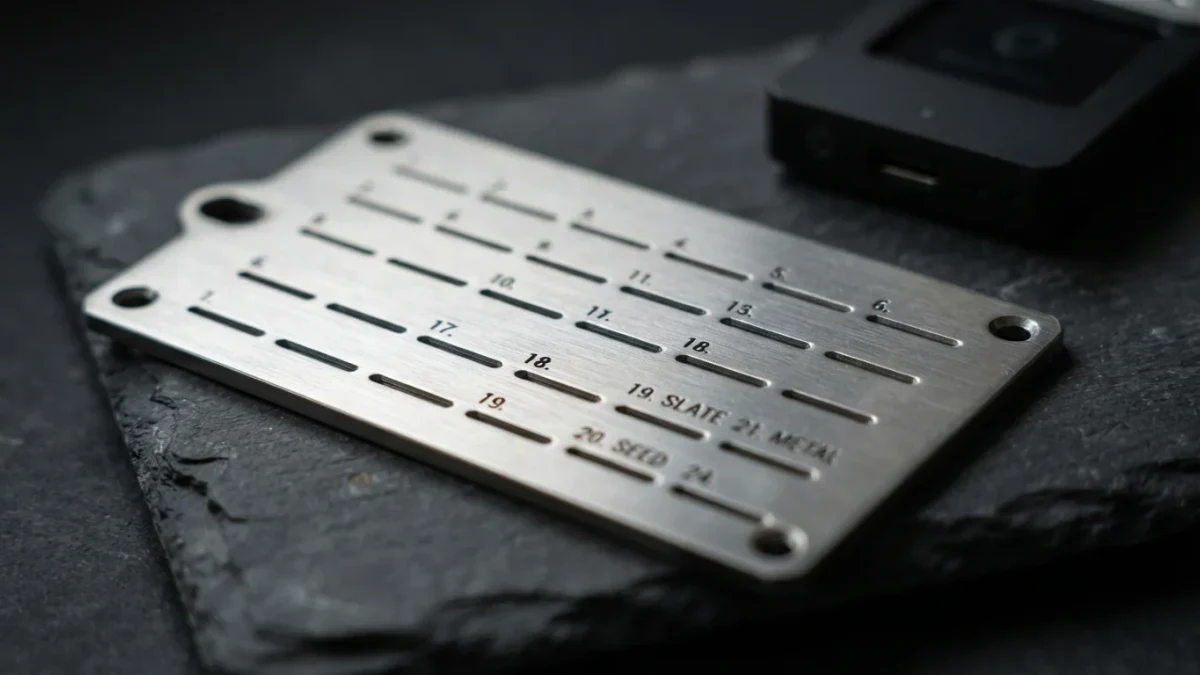
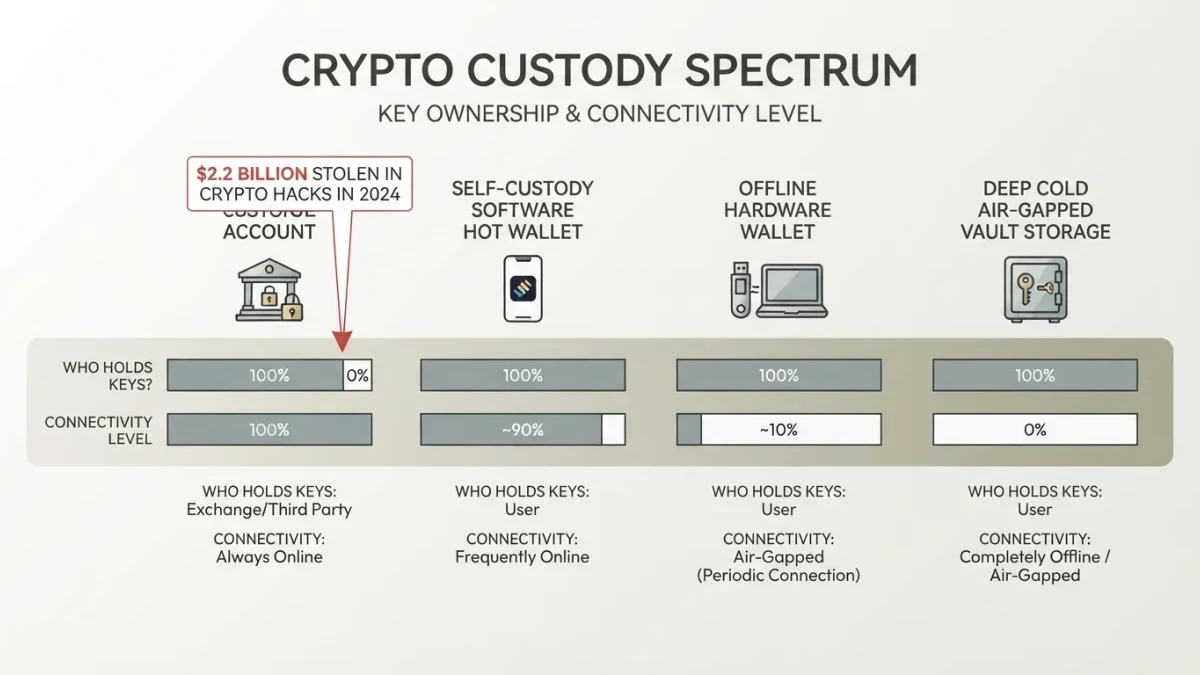
Custody in the fund route sits with the trust's named custodian, giving shareholders the same indirect exposure they have to any pooled vehicle. Direct custody runs on the spectrum described in this site's custody coverage, from exchange accounts to offline hardware, and the holder or chosen platform carries the operational risk. Retirement access separates sharply: brokerage IRAs can generally buy listed fund shares, while direct coins in an IRA require a specialized self-directed custodian, and workplace plans offered direct coins only rarely.
Trading mechanics differ as well. Fund shares trade during U.S. exchange hours with listed options on the largest products beginning November 19, 2024, per Nasdaq listings, while direct markets run continuously every day. Direct transfers settle on the blockchain in minutes and are final; fund settlement follows the securities timetable. Neither schedule is an advantage by itself, but it changes how quickly positions can be entered, exited, or rebalanced.
How Has the Fund Market Developed Since 2024?
The approval decision was the SEC's January 10, 2024 order covering 11 products, including conversions of existing trusts and new launches. Within the first year, the largest new fund passed $50 billion in assets, the fastest an exchange-traded product had reached that mark, per issuer data and Bloomberg tracking through November 2024. Aggregate spot-bitcoin product assets exceeded $100 billion by December 2024.
Growth of that scale documented where most investors entered: through brokerage accounts rather than through wallets. It also shifted the custody conversation, since a growing share of the asset's supply moved to a small number of institutional custodians. Those are observations about structure, not about the asset's merit, and this site draws no allocation conclusion from them.
Which Approach Fits Which Circumstances?
The documented fit considerations are account-driven. Investors restricted to brokerage or retirement accounts reached the asset through listed funds after January 2024, because direct holding inside those accounts required special arrangements. Investors whose strategies involve on-chain use of coins, transfers, or self-custody preferences needed direct ownership, because fund shares cannot be moved to a wallet. Frequent traders weigh exchange-hours liquidity against continuous crypto markets.
- Account type: funds fit standard brokerage and IRA accounts; direct coins need crypto venues or self-directed structures.
- Custody preference: fund holders accept the trust's custodian; direct holders choose their own point on the custody spectrum.
- Reporting preference: funds inherit securities-form reporting; direct sales moved onto broker forms from 2025.
- Usage needs: coins used on-chain must be held directly; shares cannot leave brokerage accounts.
Both routes carry the same price exposure to a volatile asset. Crypto assets can lose most or all of their value quickly, in a fund wrapper or out of one. The wrapper choice governs costs, custody, taxes, and access; it does not govern risk of loss to the market itself.