Bitcoin is a decentralized digital currency that moves value directly between network participants without a bank or payment company in the middle. It runs on a public ledger called a blockchain, secured by cryptography, with a supply capped in software at 21 million coins. Whether it belongs in a portfolio at all depends on individual circumstances, and its history of steep drawdowns is part of the answer.
The mechanism matters more than the marketing. Bitcoin does not exist in physical form, and no company issues it. Transactions are verified by a distributed network, recorded on a ledger anyone can download and check, and controlled by whoever holds the cryptographic keys. That design removes intermediaries and replaces them with rules enforced by software.
According to CoinMarketCap, Bitcoin was described in a 2008 whitepaper published under the alias Satoshi Nakamoto and launched in January 2009, making it the first cryptocurrency to come into actual use. The same source quotes Nakamoto's stated purpose: allowing "online payments to be sent directly from one party to another without going through a financial institution." This guide explains how the network works, where new coins come from, and what holding bitcoin actually requires.
How does the Bitcoin network actually work?
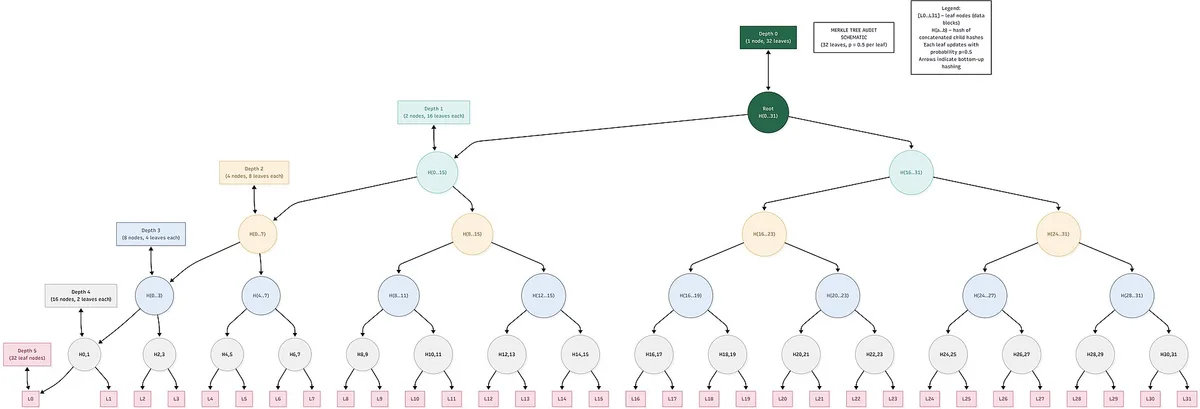
Bitcoin is a peer-to-peer system. Every transaction happens directly between equal, independent participants, with no intermediary required to permit or facilitate it. A distributed ledger records everything, and that ledger is the blockchain: batches of transactions, called blocks, linked together and secured by cryptographic algorithms.
Three features follow from this design. Transactions are recorded on a public ledger that anyone can download and help maintain. Value moves directly from sender to receiver without a bank. And holders who store their own bitcoin have complete control over it, because it cannot be accessed without their cryptographic key. As CoinDesk describes it, the network uses a blockchain that can be accessed by anyone to verify transactions, with miners doing the verification and collecting rewards and fees for it.
The practical consequence is a trade-off. There is no customer service desk to reverse a mistaken transfer, and no institution to restore access if keys are lost. Control and responsibility arrive together.
Who created Bitcoin, and does it matter?
Bitcoin's inventor is known only by the pseudonym Satoshi Nakamoto, and the true identity of the person or group behind the name remains unknown. Nakamoto published the whitepaper on October 31, 2008, and mined the first block, the genesis block, on January 3, 2009. The first known commercial transaction came later: programmer Laszlo Hanyecz traded 10,000 bitcoins for two pizzas on May 22, 2010, an event now remembered as "Bitcoin Pizza Day."
The anonymity of the founder is not a footnote. It is the reason the system can plausibly claim to have no central authority. Nakamoto eventually handed control of the code repository to Gavin Andresen, and development since then has been a collaborative process. According to CoinMarketCap, the source code repository lists more than 750 contributors, and changes proceed through Bitcoin Improvement Proposals, with miners and node operators enforcing the network's rules. No single entity controls Bitcoin, but that also means no single entity fixes it quickly when something goes wrong.
Why is the supply capped at 21 million?
Bitcoin's total supply is limited by its software and will never exceed 21 million coins. New coins are created only through mining, the process in which miners package relayed transactions into blocks and protect them with complex cryptographic calculations. As compensation for that computational work, miners receive a block reward.
That reward started at 50 bitcoins per block and is cut in half every 210,000 blocks, which the network takes roughly four years to mine. As of the 2020 halving, the reward stood at 6.25 bitcoins per block. This schedule is the mechanism behind bitcoin's scarcity: issuance is predictable and shrinking, and no new coins can be released once the cap is reached, as TradingView notes in its market data.
Scarcity is a design feature, not a guarantee of value. A fixed supply limits new issuance, but it does nothing to stabilize demand, and demand is what sets the price. Readers who want the mechanics of the reward schedule in detail can see How the Bitcoin Halving Works and What It Changes, and the underlying security model is covered in Proof of Work: How Mining Secures Crypto Networks.
What does holding bitcoin actually require?
Using bitcoin requires a wallet, which consists of a public key for receiving payments and a private key for controlling the funds. Each bitcoin is divisible to eight decimal places into 100 million units called satoshis, so purchases do not require buying a whole coin. The custody question is where beginners most often underestimate the risk.
There are two broad paths. Leaving coins on an exchange or with a custodian means trusting that third party's controls; the history of this asset class includes exchange collapses in which customers lost funds. Self-custody removes the intermediary but transfers full responsibility for key management to the holder, and a lost or exposed seed phrase means permanent loss. Both models are explained in What Self-Custody Means: Keys and Seed Phrases and Crypto Custody: Cold Wallets vs. Hot Wallets. For exposure without direct key management, some investors consider funds instead; the trade-offs are laid out in Bitcoin ETFs vs. Direct Holding: Key Differences.
What are the risks, stated plainly?
Bitcoin is volatile, and the volatility is not a bug that a future upgrade will remove; it is a property of an asset with no cash flows and demand that swings with sentiment and macro conditions. TradingView's market data shows bitcoin reaching a high of 126,272 USD on October 6, 2025, and a low of 2 USD on October 20, 2011, with a one-year decline of roughly 32 percent in that data snapshot. Any allocation sized carelessly can dominate a portfolio's risk, which is why volatility belongs in the sizing conversation; Crypto Drawdown History: What Volatility Means covers the drawdown record.
The full disclosure, stated without softening: crypto assets can lose most or all of their value quickly. Bitcoin has no earnings, no issuer backing, and no guarantee of continued acceptance. Its price moves with macro news and risk sentiment like other speculative assets, a relationship examined in How Crypto Correlates With Stocks and Bonds.
Two limitations of the bull case also deserve plain statement. First, bitcoin's early adoption advantage is real but historical; thousands of competing projects have since been built on the same idea, and TechnicalView's own framing that advocates see it facilitating "the next stage for the global financial system" is, in that source's words, something that "remains to be seen." Second, the concentration of early coins matters: CoinMarketCap reports that Satoshi Nakamoto alone is believed to hold over a million bitcoin, coins that have never moved. Scarcity in circulating supply is therefore looser than the 21 million headline suggests.
What this means for a beginner
Bitcoin is best understood as a piece of financial infrastructure: a ledger, a consensus rule set, and a fixed issuance schedule, all running without an operator. That is the genuine innovation, and it is separate from the question of what the asset is worth. The first question to answer is not how much to allocate, which this site does not advise on, but whether the holder can tolerate the custody responsibility and the drawdowns. Anyone considering it should weigh the mechanism against the risks, start from education rather than enthusiasm, and treat any yield or return promise attached to bitcoin as a liability question first. This article is information and education, not investment advice.