
A risk tolerance questionnaire is a scored self-report instrument that financial firms use to estimate how much portfolio fluctuation a client will accept. Under the SEC's Regulation Best Interest, in force since June 30, 2020, a broker-dealer's care obligation must rest on the customer's investment profile, in which risk tolerance sits alongside capacity and horizon (SEC Release No. 34-86031).
This article explains how the instruments are built and what the research says about their limits; it interprets no reader's answers.
What do the instruments measure?
Researchers distinguish three constructs that questionnaires try to separate. Risk tolerance is willingness to accept variation in outcomes — a psychological tendency, relatively stable but not fixed. Risk capacity is financial ability to absorb losses without derailing goals. Risk perception is how risky a situation feels at the moment, which fluctuates with markets and headlines.
Academic instruments formalized the first construct: Grable and Lytton's 13-item scale, published in Financial Counseling and Planning (1999), became a widely cited multidimensional measure, and commercial vendors since have built longer proprietary batteries on the same logic. What all of them share is self-report: the questionnaire records what a person says, not what a person does.
How are the items designed and scored?
A typical battery mixes item types. Attitude items ask for agreement on Likert scales with statements about volatility and loss. Scenario items pose a concrete event — a portfolio falls 20% — and offer responses ranging from selling everything to holding or adding. Fact items cover time horizon, liquidity needs, income stability, and investment experience, which feed the capacity side of the profile.
Answers map to a small number of model portfolios, usually labeled conservative, balanced, and growth, with vendor-specific boundaries. There is no industry-wide standard instrument, so two firms can score identical answers into different models — a documented source of divergence that the profiles' regulatory role makes consequential.
What are the documented validity limits?
The psychometric literature reports four recurring limitations. Each is documented; none makes the instruments useless, and together they define how much weight a result can carry.
- Words versus behavior: stated tolerance and observed behavior diverge, with investors frequently describing themselves as more tolerant than their drawdown actions later show.
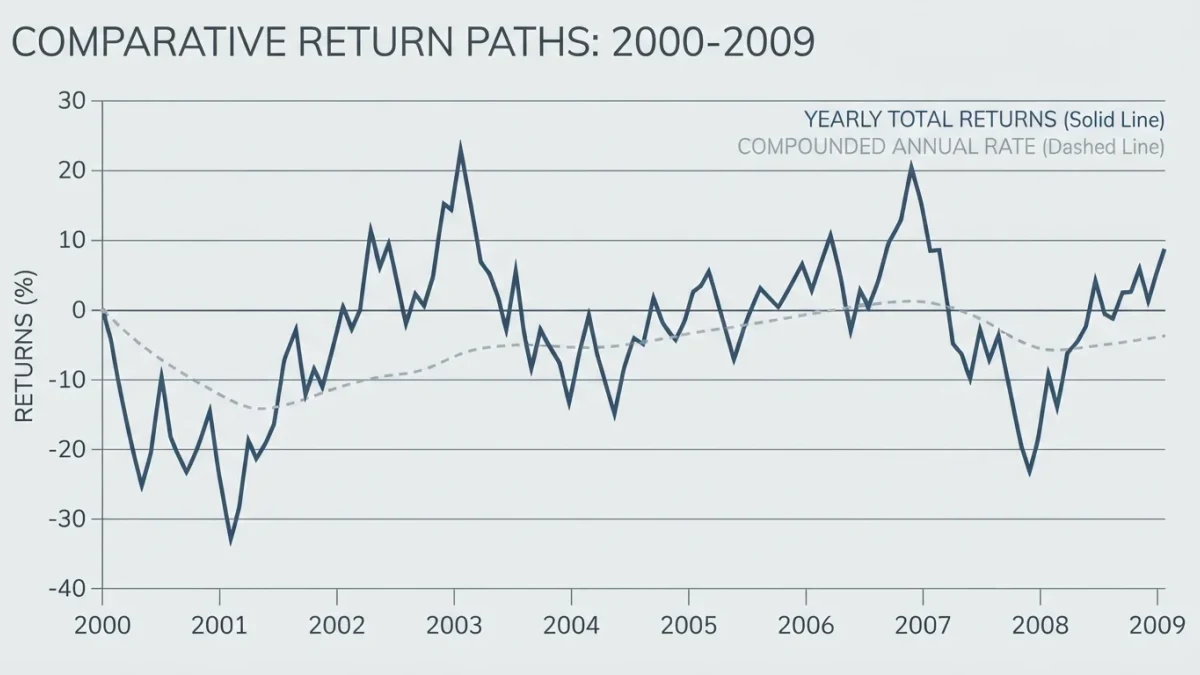
- Market-condition drift: scores measured after long rallies run higher than scores from the same population after declines, a temporal instability documented in Roszkowski, Davey, and Grable's psychometric review (Journal of Financial Planning, 2005).
- Perception noise: MacGregor, Slovic, Berry, and Evensky documented in the Financial Analysts Journal (1999) that advisors and investors misjudge risks from unfamiliar products, so answers depend on how well an item is understood.
- Framing and boundaries: item wording shifts responses, and investors near category cut-offs can be classified differently by minor score changes.
How do tolerance and capacity differ in practice?
The two constructs answer different questions and can disagree in the same person. Willingness without capacity describes an investor psychologically comfortable with a 40% drawdown whose finances cannot absorb one. Capacity without willingness describes the reverse: ample resources and a stated preference for stability. Profiles record both because a recommendation built on one alone ignores the other.
| Dimension | Risk tolerance | Risk capacity |
|---|---|---|
| Nature | Psychological willingness | Financial ability |
| Measured by | Attitude and scenario items | Horizon, liquidity, income, and balance-sheet facts |
| Stability | Relatively stable, drifts with market conditions | Changes with circumstances, not sentiment |
| Typical mismatch | Comfort exceeded by losses actually experienced | Resources exceeding stated appetite |
What regulatory role do the answers play?
Regulation Best Interest, adopted by the SEC in 2019 and effective June 30, 2020, requires broker-dealers to have a reasonable basis for believing a recommendation is in a retail customer's best interest, in part by using diligence, care, and skill to learn the customer's investment profile. The profile enumerates risk tolerance, age, liquidity needs, time horizon, financial situation, and objectives.
The regulation requires the information, not a particular tool; questionnaires are the common means of collecting it. Comparable profile obligations apply to investment advisers through their fiduciary duties, which is why the same battery of questions appears across firms with different labels.
How should a reader treat the output?
The research supports a modest reading. A questionnaire result is a documented starting hypothesis about willingness, scored from self-reported answers on one day, best weighed alongside the capacity facts and revisited when either changes. Investor.gov's materials on gauging risk tolerance frame the exercise the same way: an input to allocation decisions, not a verdict.
Three practices recur in the guidance literature: retake the instrument after major market moves rather than once, separate emotional answers from financial facts when reviewing results, and treat the model label as a mapping rather than a diagnosis. What any profile should change in an actual portfolio is a question the documents leave to circumstances this article cannot assess.