
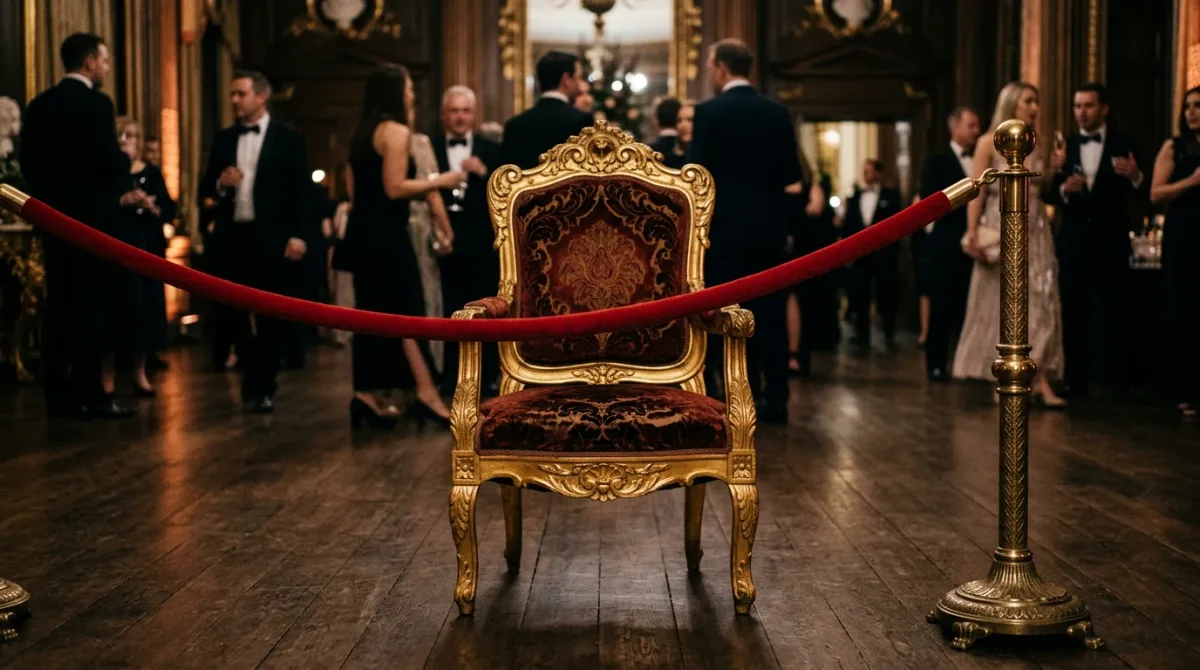
The Met Gala's roughly 550-person guest list runs on a $30,000-per-person, $275,000-per-table structure, according to Fortune's reporting on the event's economics, with brands, designers, and sponsors typically covering the bill for the famous faces who fill the seats, and the selection process itself kept, in Fortune's phrase, "hush-hush."
Who Actually Ends Up on the List?
The Costume Institute Benefit, which is the museum's own name for the evening everyone else calls the Met Gala, exists to fund one department. Per the Metropolitan Museum of Art's own account, the event "provides the department with its primary source of funding for annual exhibitions, publications, acquisitions, and operations," and that funding mandate is the quiet logic behind who gets a seat. Attendance skews toward people and institutions who can absorb a five- or six-figure table, not necessarily toward whoever generated the most headlines that year.
Fortune's 2018 accounting of the event put the guest count at roughly 550 people, a number the museum has had little reason to expand, since the room itself — the Met's Great Hall and the adjoining galleries — sets a hard physical ceiling. Every credentialed guest in that room, per Fortune's reporting, corresponds to either a table bought outright or a seat gifted by whoever bought it. It is, in that sense, less a party than a very expensive seating chart with a red carpet stapled to the front of it.
That ceiling explains a fair amount of the mythology built up around the evening. A guest list capped at roughly 550 seats, in an industry that measures relevance in the thousands of invitations sent, is scarce almost by accident of architecture. The room was built for a museum's daytime foot traffic, not one night's worth of fashion, film, sports, business, and music guests at once, and per the Met's own account, those are precisely the worlds the benefit now draws from.
How Much Does a Seat Actually Cost?
A single ticket runs $30,000, and a full table $275,000, according to Fortune's reporting on the event's economics — figures that mean almost no attendee, however famous, is paying out of pocket. Designer gowns worn on the carpet cost roughly $35,000 to produce, per the same reporting, and that expense is typically absorbed by the house dressing the star, not the star herself.
Sponsorship runs deeper than the dress. Fortune's 2017 reporting on the event described brands "often" covering a guest's table outright, while jewelry houses have paid figures reported as high as $1 million to place a specific piece on a specific wrist for the cameras. A designer, one industry source told Fortune, absorbs "the material and man hours" as the cost of the exposure — the same logic that has held, with inflation, since the gala became a red-carpet spectacle rather than a private dinner.
Who Decides the Seating Chart?
The Met's own account credits Anna Wintour, Condé Nast's artistic director and Vogue's editor-in-chief, as co-chair "since 1995 (excluding 1996 and 1998)," a run of nearly three decades that makes her the closest thing the evening has to a single decision-maker. Before her, the museum names Jacqueline Kennedy Onassis as co-chair from 1977 to 1978 and Patricia Taylor Buckley from 1979 to 1995 — a lineage the institution frames as continuous stewardship of what began as a much smaller fundraiser.
Each year's co-chairs, working with a rotating host committee, are the ones who ultimately decide who sits near whom, but the mechanics of that process are not published anywhere Fortune's reporters could find. That opacity is by design, not oversight: a seating chart is one of the few genuinely scarce things left in modern fashion media, and scarcity is easier to protect when nobody explains how it works.
Why Does the Secrecy Hold Up Every Year?
Part of the answer is simple math: with roughly 550 seats and an industry's worth of people who would happily buy one, publishing the placement logic would only invite argument over who got bumped for whom. Keeping the mechanics private lets the co-chairs adjust the room without ever having to defend a specific swap in public.
The other part is that the opacity does real editorial work for the evening itself. A published seating algorithm would turn the benefit into a spreadsheet; a guest list that arrives, seemingly complete, only once the red carpet opens preserves the sense of occasion the Costume Institute is, per its own account, trying to fund in the first place. The mystery is not incidental to the fundraising; per the available record, it functions as part of it.
Where Does the Money Actually Go?
The museum is direct about the destination of the funds: they underwrite the Costume Institute's exhibitions, publications, acquisitions, and day-to-day operations, per the Met's own materials. As of the 2018 benefit, Fortune reported the prior year's event had raised more than $12 million, funding an exhibition — that year, "Heavenly Bodies: Fashion and the Catholic Imagination" — that filled 58,600 square feet with pieces including 50 items on loan from the Vatican.
The gala's origin was considerably plainer. Per the Met's own history and Fortune's reporting, the event began in 1948 as a midnight supper dubbed "the Party of the Year," with tickets priced at fifty dollars — a fundraiser created by the publicist Eleanor Lambert that has since compounded, seat by seat, into one of fashion's largest single-night transfers of money to a museum department.
What has not changed since 1948, per the Met's own framing of its history, is the basic exchange at the center of the evening: a ticket in return for support of the department's work. Everything that now surrounds that exchange — the red carpet, the theme, the hosts, the six-figure tables — has grown up around a transaction that is, underneath the spectacle, still fairly plain.
For a related events perspective, read Inside the Met Gala: How Fashion's Biggest Night Actually Runs.
For more context, read Remarks by Secretary of the Treasury Janet L. Yellen at the Pandemic Fund Investment Case Launch Event.
For more context, read trust.
For more context, read development.